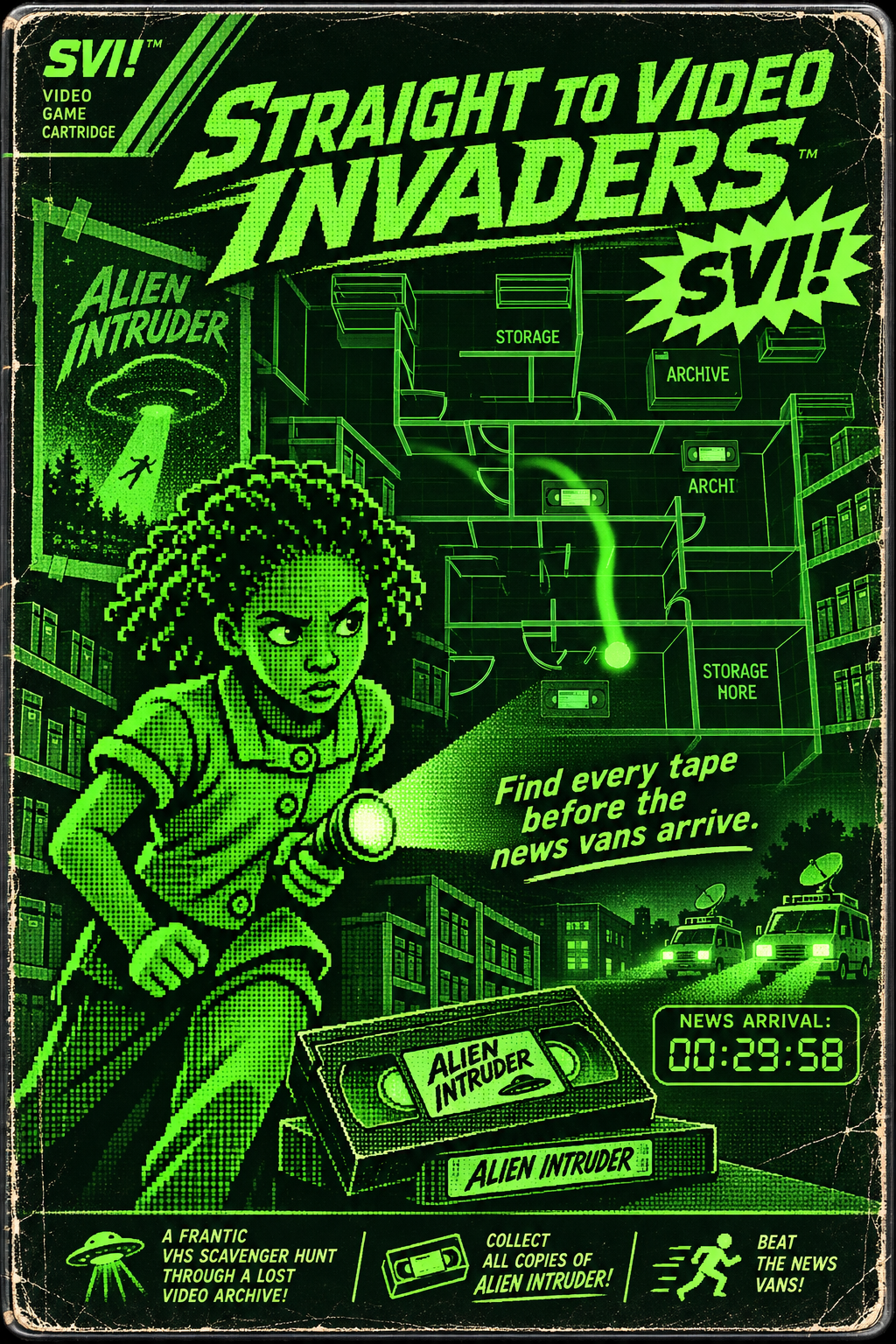
Sixty-two children. One metallic craft. Thirty years of consensus. And one name nobody thought to look up.
For thirty years, the September 1994 incident at Ariel School in Ruwa, Zimbabwe, has been treated as an unassailable monolith of UFO folklore. Sixty-two schoolchildren, ages six to twelve, reported watching a metallic craft descend near the edge of their schoolyard during morning break, followed by encounters with small, dark-clad figures who communicated telepathic warnings about environmental ruin. Because the students were interviewed separately by headmaster Colin Mackie and later filmed by Harvard psychiatrist John Mack, proponents have long argued that the sheer consistency of their drawings and testimony rules out fabrication.
Yet when the primary visual artifacts of the Ruwa case — the children’s crayon sketches and verbatim descriptions — are placed side-by-side against the VHS shelves of 1993–1994, a far more terrestrial origin emerges. The structural details of the craft, the appearance of the entities, and even the central name at the heart of the event align with uncanny precision to a single straight-to-video sci-fi thriller released the year prior: Alien Intruder (1993).
The Name Collision & the VHS Pipeline

Directed by Ricardo Jacques Gale and starring Billy Dee Williams and Tracy Scoggins, Alien Intruder hit the direct-to-video market in 1993 — putting it squarely on rental shelves across Southern Africa in the months leading up to September 1994. Ruwa was an affluent commuter and farming community outside Harare where families routinely owned VCRs, satellite dishes, and imported American tapes.
The plot centers on Commander Skyler (Williams), who leads a crew of convicts aboard a salvage vessel to investigate a derelict ship. During the voyage, the crew enters virtual reality simulations infiltrated by a mysterious alien entity — literally named Ariel (played by Scoggins) — who crosses from simulation into physical reality to sow paranoia and turn the crew against one another.
A 1993 film featuring an alien named Ariel, circulating right before an alien encounter at Ariel School.
That coincidence provides an immediate linguistic hook for children trading stories on a playground. While an R-rated action-thriller wouldn’t be screened in a primary school classroom, it only takes one or two kids catching the tape at an older sibling’s house, a sleepover, or a late-night broadcast — or simply inspecting the VHS box art — to seed a shared visual vocabulary at morning recess.
Film Stills vs. Schoolyard Sketches
When we compare the Ruwa witness drawings and interview transcripts directly against frames from Alien Intruder, the overlap moves past coincidence into concrete morphological transfer.
01Craft silhouette & lighting
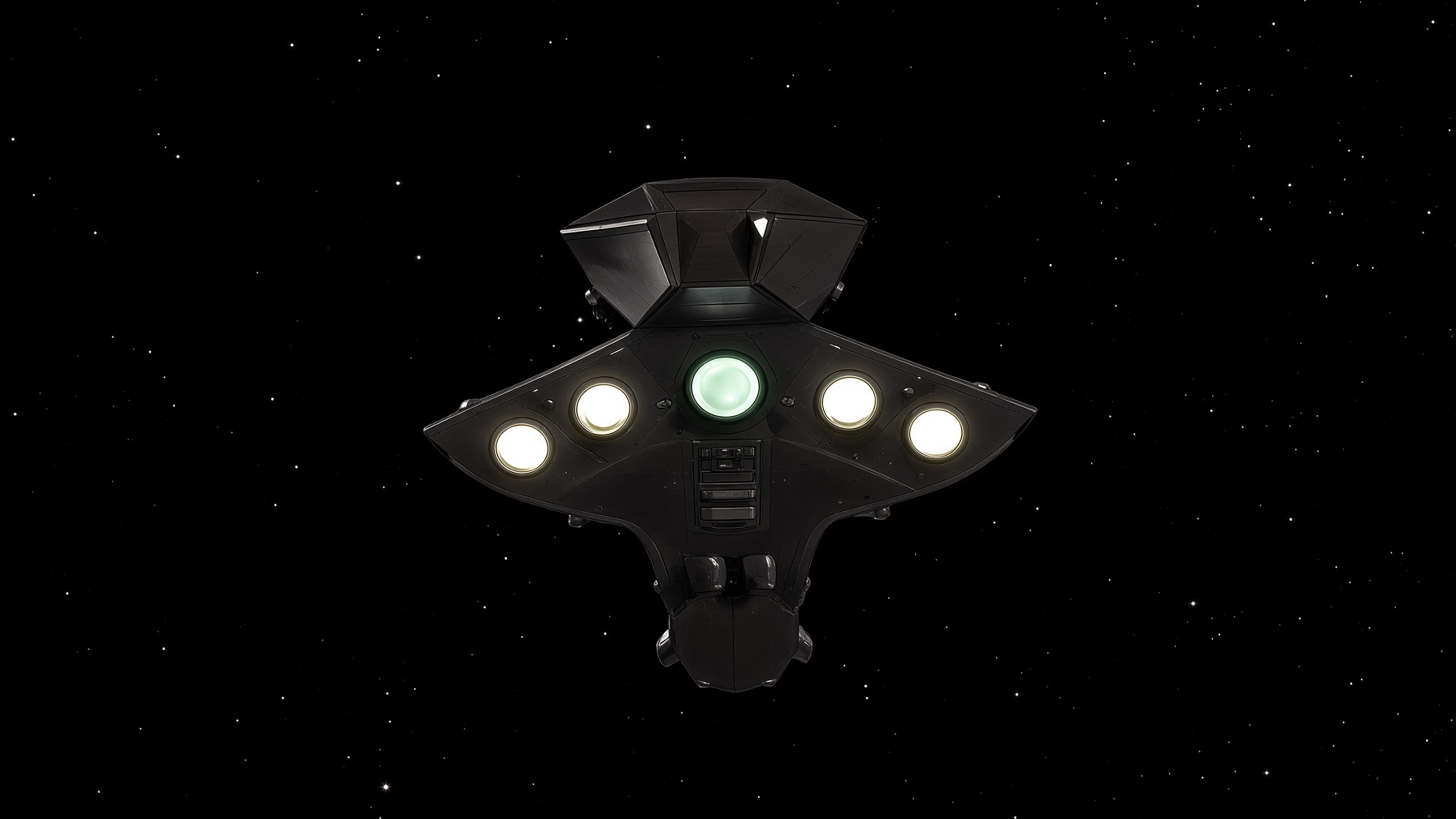
A dark, angular delta-winged hull topped by a faceted upper command block, featuring bright circular lights arrayed across the lower span and center.
Student sketches (such as Tertia’s, dated Friday 16/9/1994) depict a wide curved hull topped by a raised dome or crown, with a cluster of starburst lights across the lower band and upper center.
02Entity standing on the hull
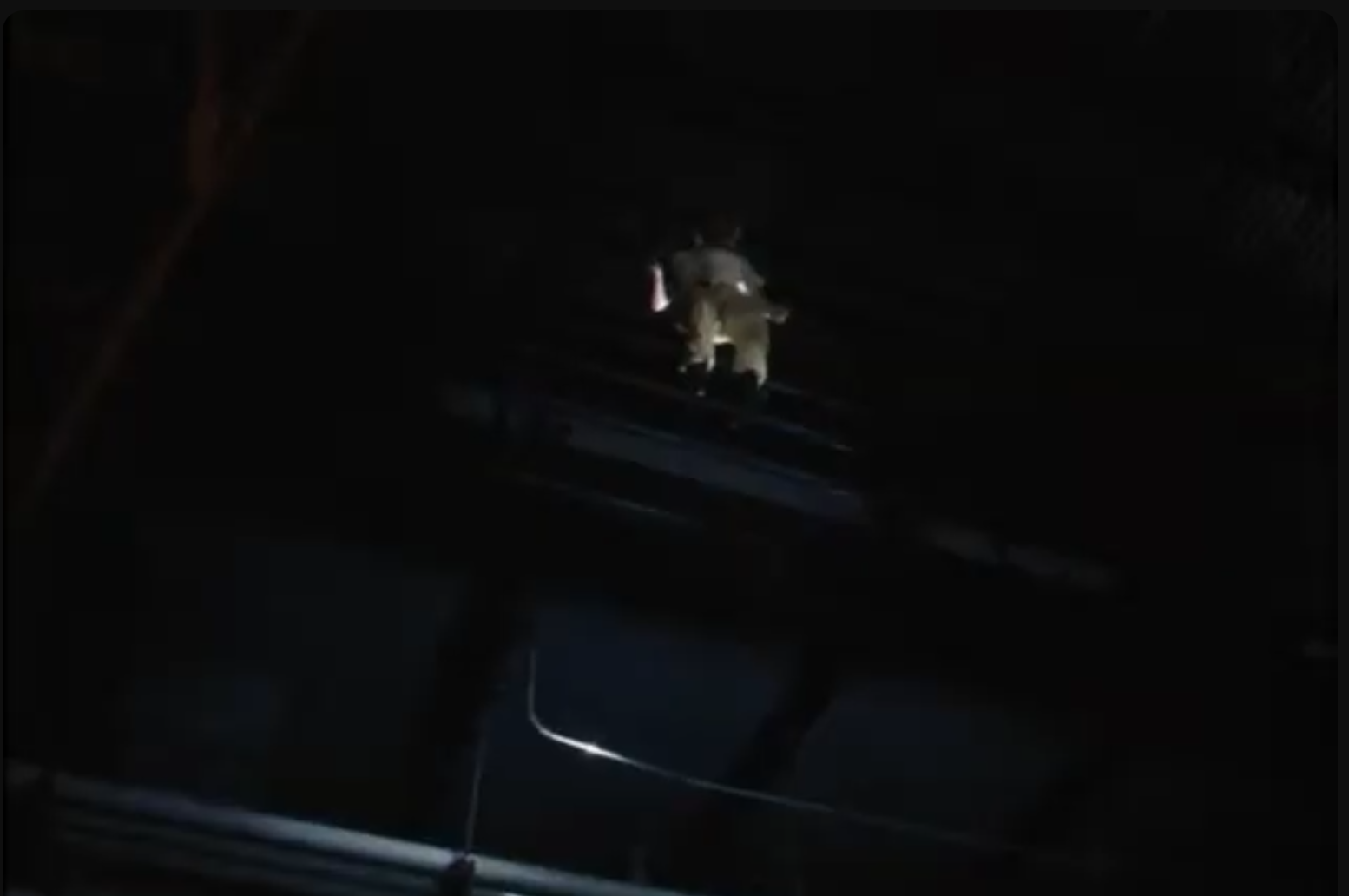
Low-angle shots frame a figure perched high along the dark metallic catwalk or ridge of the ship, light catching the legs and torso from below.
Multiple children explicitly drew and described a figure standing on top of or along the rim of the landed craft rather than on the grass.
03The flash & waist band
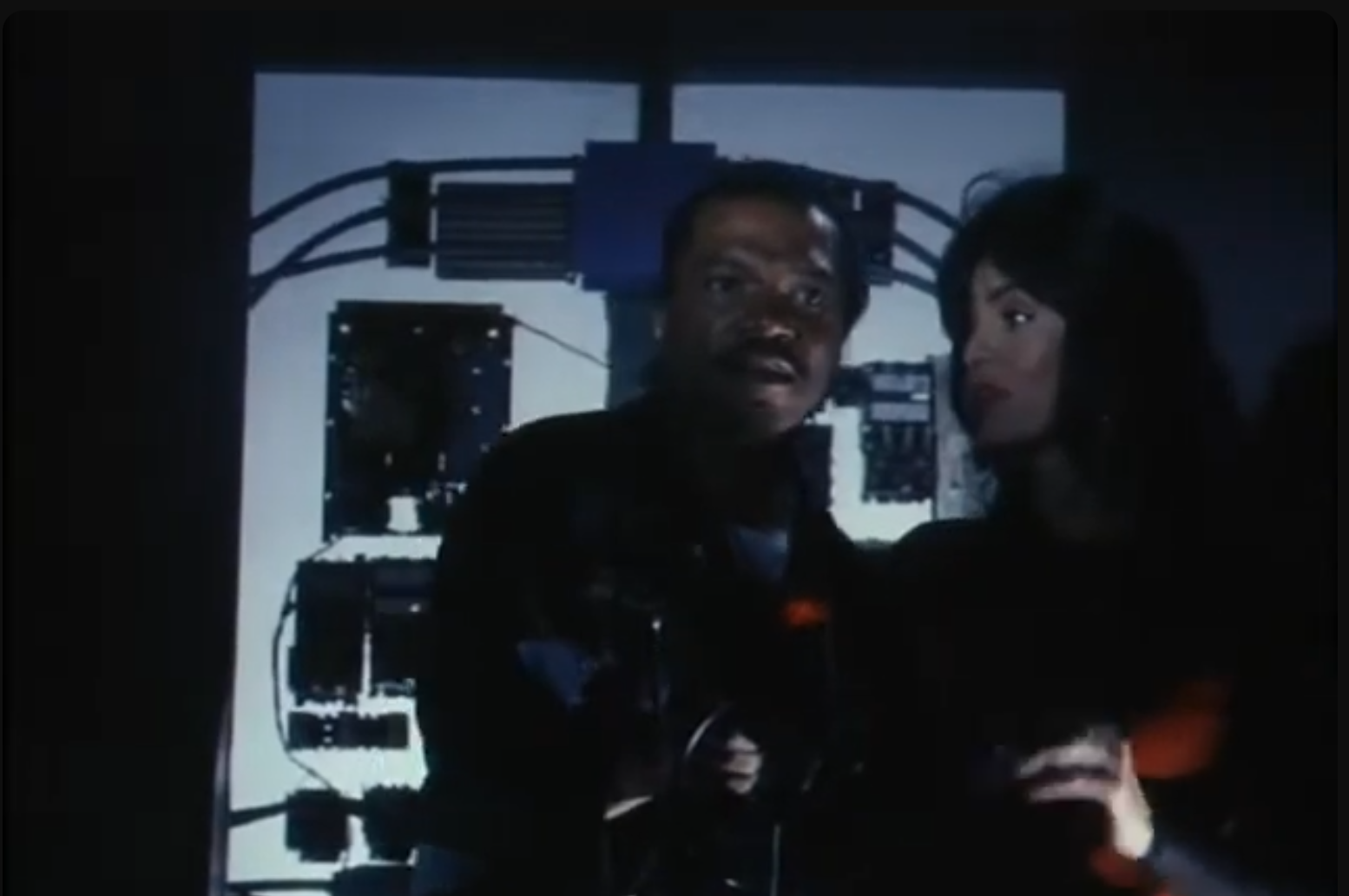
Doorway frames show a dark silhouette blown out by a bright white flare, bisected by a distinct light horizontal band across the midsection; cover art features prominent waist belts and harnesses.
Witness drawings repeatedly highlight bright flashes of light, red accents (matching Scoggins’s red jumpsuit on the cover), and a horizontal belt or midriff division on the figures.
04Long hair vs. default “him”
Tracy Scoggins’s character features thick, dark, shoulder-length hair, while Commander Skyler wears a dark uniform.
Witnesses defaulted to calling the entity “him,” yet several insisted the figure had long black hair — famously compared to Michael Jackson during interviews — a rare departure from standard bald “grey” alien tropes.
05Slow motion & glossy features
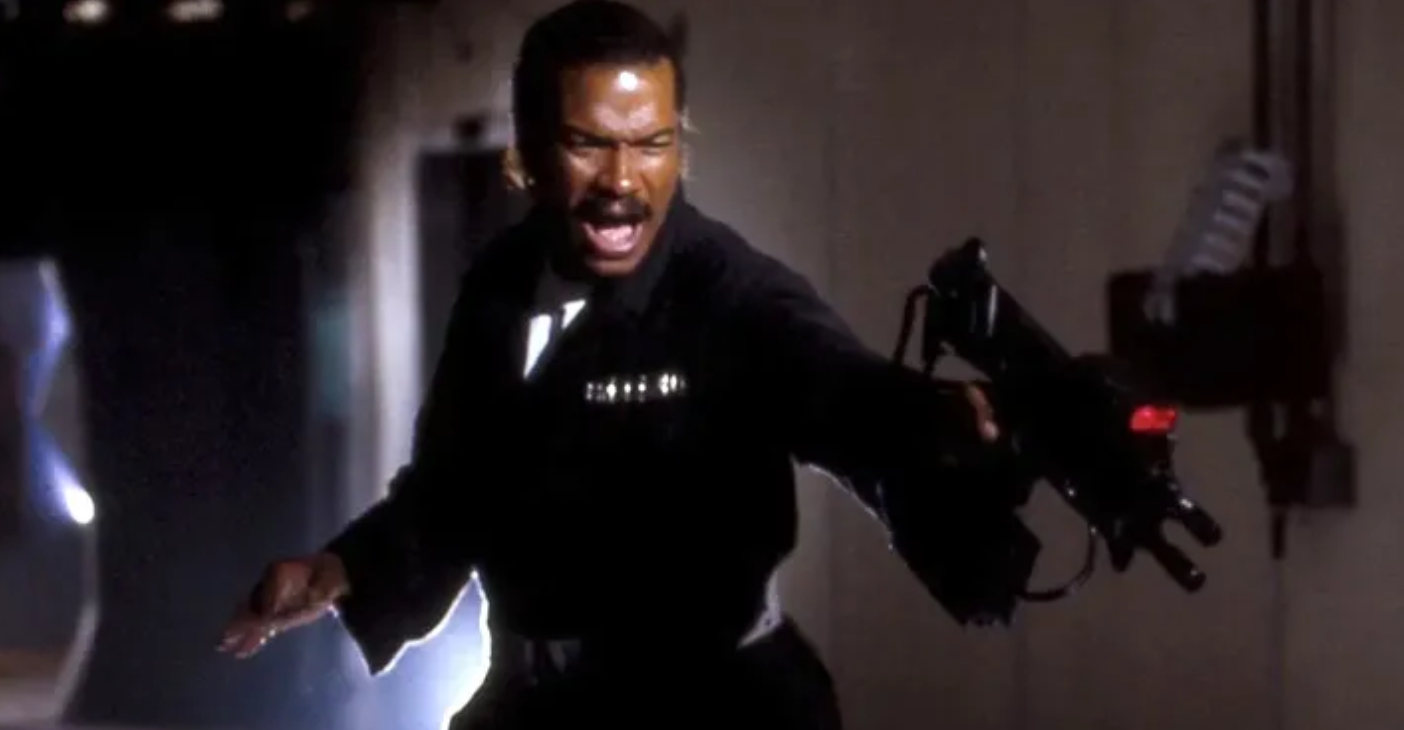
High-gloss studio key lighting on Billy Dee Williams’s face creates bright specular highlights on cheekbones and brow against dark shadow, paired with slow-motion action sequences.
Children described the entity running in slow motion, looking “plastic” or “greasy,” with oversized dark eyes — a classic analog-video distortion when bright cheek highlights flatten dark eye sockets.
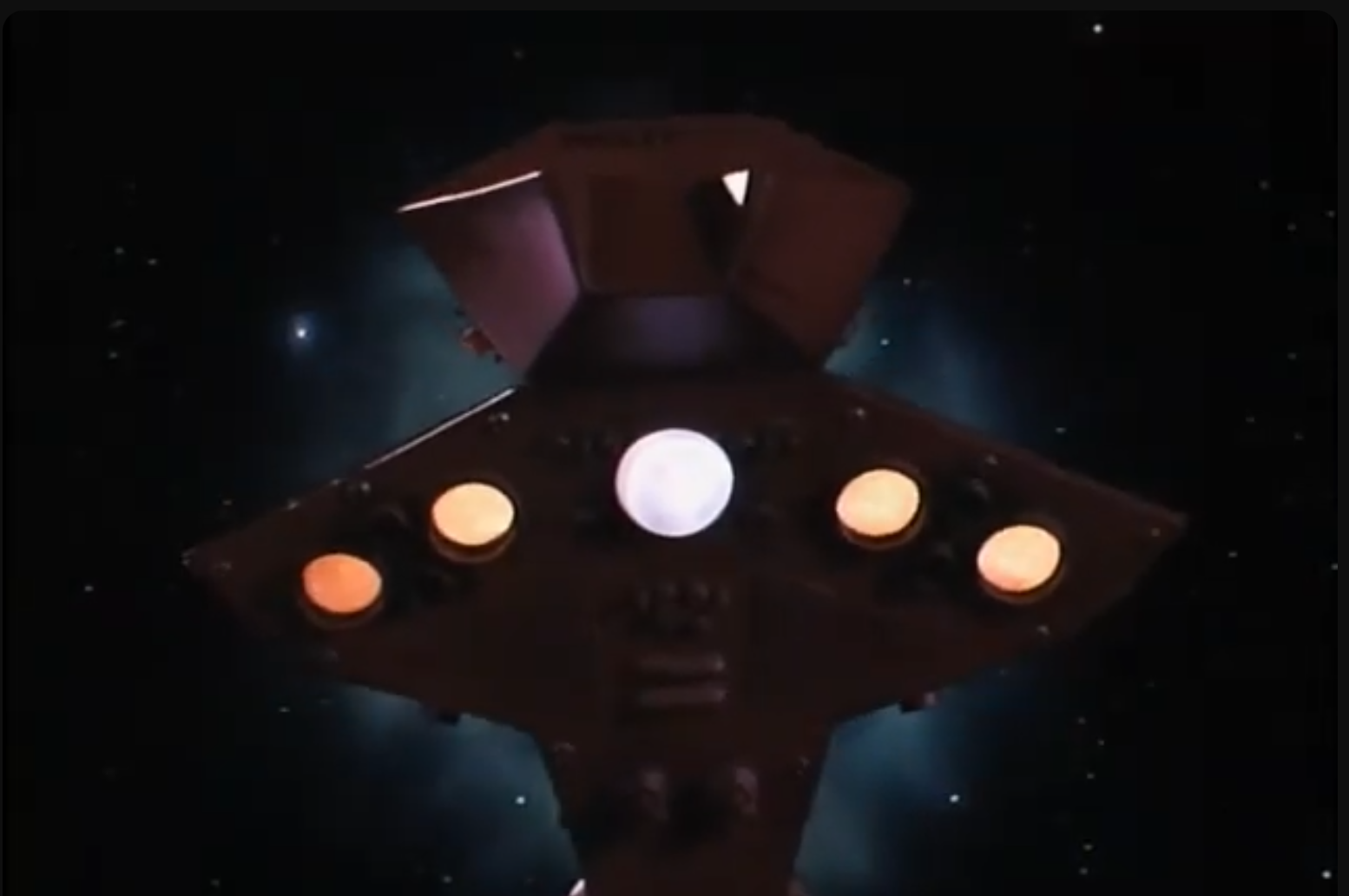
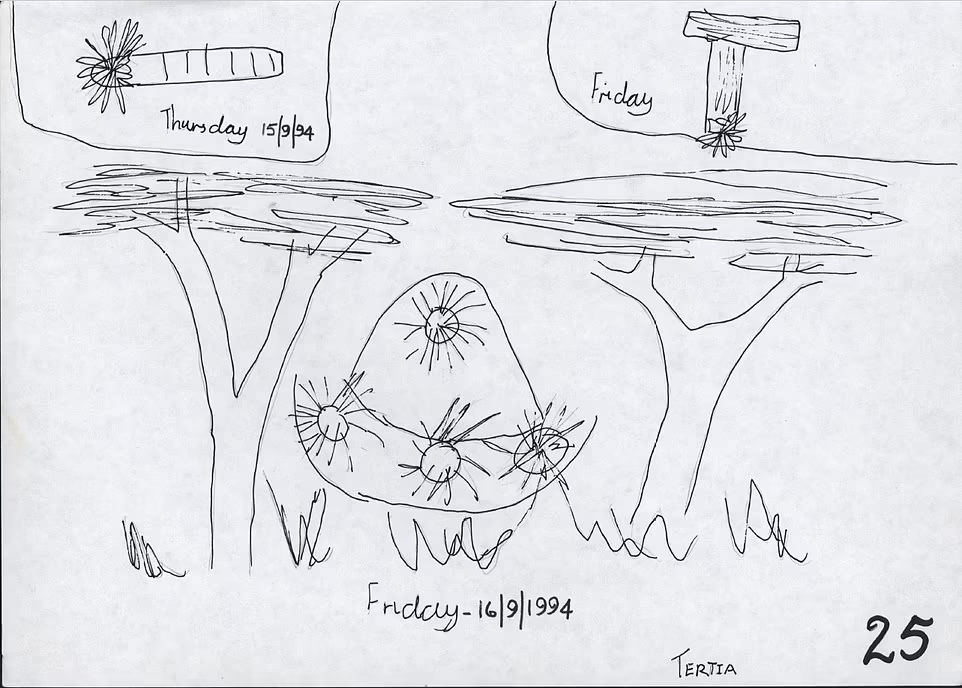
Both share the wide lower wing span, the raised upper crown, and the specific four-point starburst light distribution.
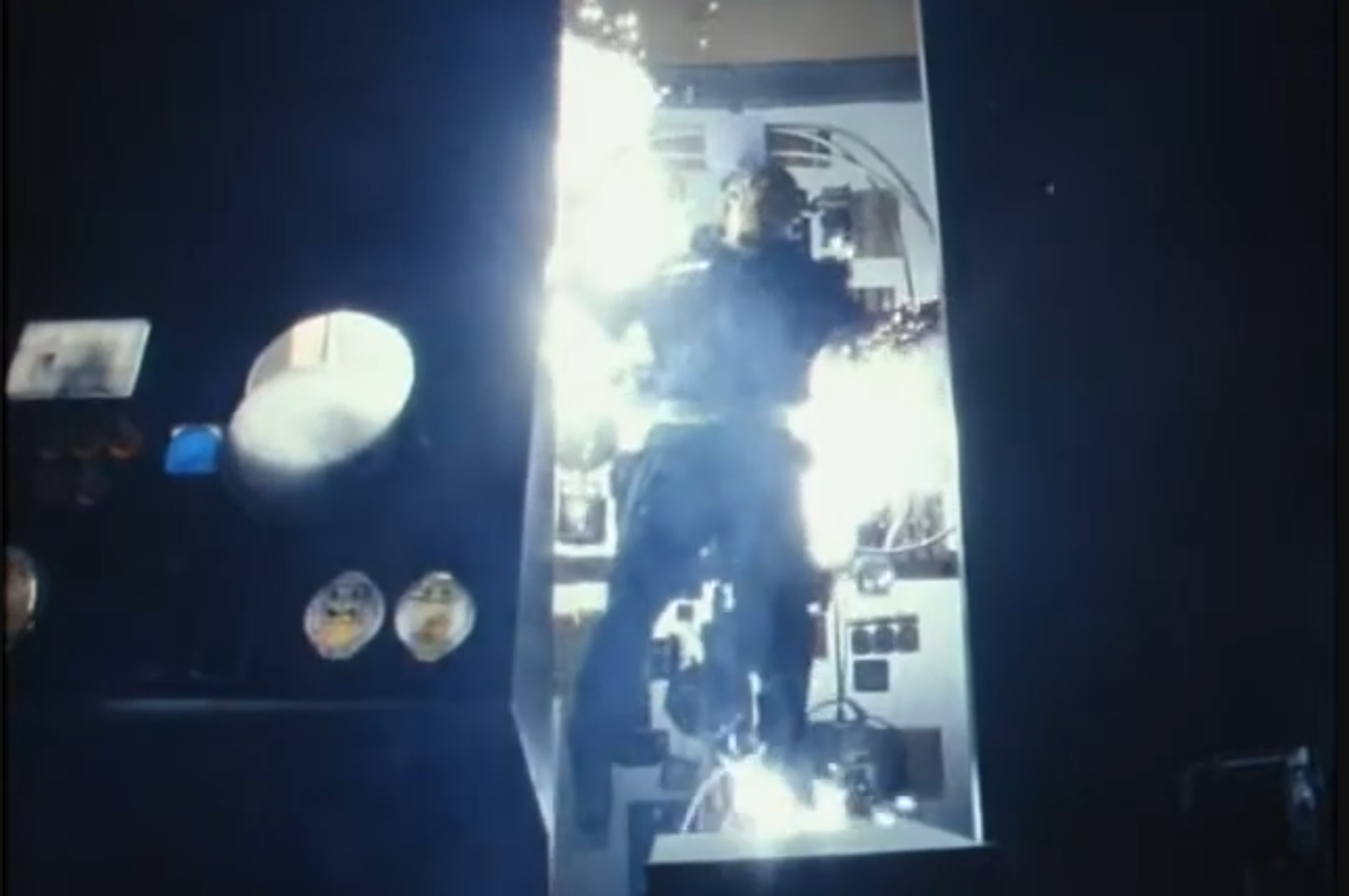
The high-contrast silhouette captures the blown-out white flare and horizontal waist band echoed in the children’s accounts of blinding flashes and belted dark suits.
How a Movie Becomes a Memory
Identifying the visual source explains what the children drew. Behavioral psychology explains how sixty-two kids converged on the experience in the tall grass bordering the schoolyard.
Synchronized brain responses
Genre films are engineered with sharp visual framing, sudden light flares, and pacing cues that lock viewers’ attention onto the exact same moments. Kids who watched the tape together absorbed identical high-contrast mental snapshots.
Emotional contagion
Humans unconsciously mimic the posture, vocal pitch, and tension of people around them. When an initial group on the edge of the field gasped, pointed, or acted frightened, nearby classmates automatically mirrored that stress response.
Social referencing
Children constantly scan their peers to gauge whether a situation is a game, a threat, or a shared secret. In the interviews, kids repeatedly glance sideways to check who is playing along — a feedback loop that smooths out contradictions before adults ever hand out paper and crayons.