Sam Harris
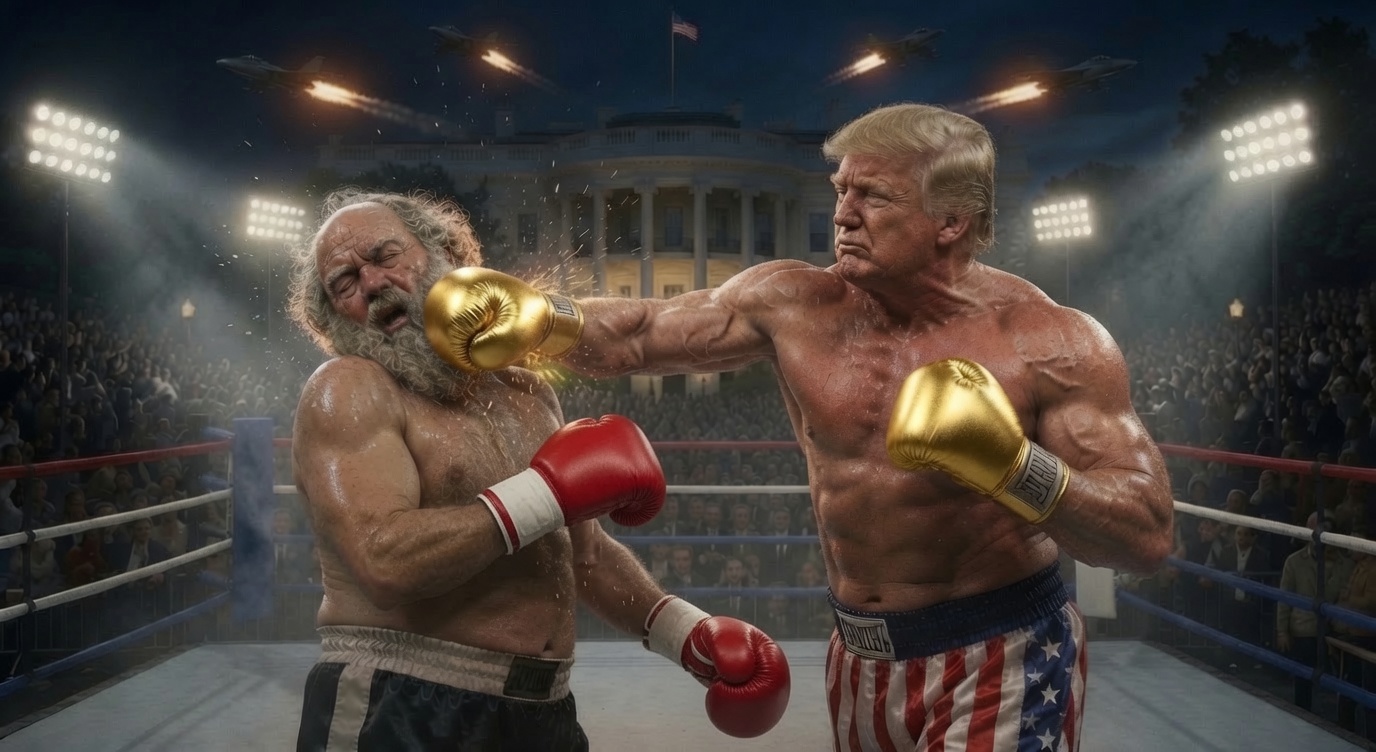
He proposed a secular moral philosophy grounded in scientific quantification and rigorous, independent reason — then abandoned the whole apparatus during the pandemic to enforce institutional orthodoxy against dissenters.
The Seductive Proposition
In the early years of the twenty-first century, when the public square still pretended to value clarity over sentiment, a neuroscientist and philosopher named Sam Harris emerged as one of the more formidable voices of the so-called New Atheism. He wrote books that combined crisp prose with a prosecutor's zeal, dismantling religious dogma with arguments that were at once ruthless and almost elegant in their simplicity. His moral philosophy, laid out most fully in The Moral Landscape , promised something audacious: that human well-being could be measured, quantified, and pursued as a science, without recourse to gods, scriptures, or any of the usual metaphysical furniture. Reason alone, he insisted, was sufficient to ground ethics. The well-being of conscious creatures would serve as the lodestar, and science would map the terrain.
It was a seductive proposition, especially to those who had grown weary of supernatural explanations and clerical authority. Harris spoke with the calm authority of a man who had meditated his way to intellectual invulnerability. He could defend controversial positions — torture in extreme cases, racial profiling under narrow conditions, the biological reality of group differences — without ever raising his voice or losing the thread of logic. To his admirers, he represented the best of secular rationality: unflinching, principled, willing to court unpopularity for the sake of truth.
Then came the pandemic, and with it the unraveling.
What began as a disagreement over public-health policy metastasized into something far more revealing. Harris, once the scourge of dogma, aligned himself decisively with institutional authority. He dismissed early discussions of alternative treatments — most notoriously ivermectin — as the ravings of a “cult.” The drug, he suggested, was fit only for horses; those who considered it were not merely mistaken but dangerous, contributors to a “polluted information landscape” that endangered lives. Joe Rogan, once a friend, became a vector of harm for platforming dissenting voices. Bret Weinstein, the evolutionary biologist who had questioned lockdown orthodoxy and advocated for repurposed drugs, was lumped into the same category of intellectual criminals.
Spec Box / The Framework
“The principle bent to fit the tribe.”
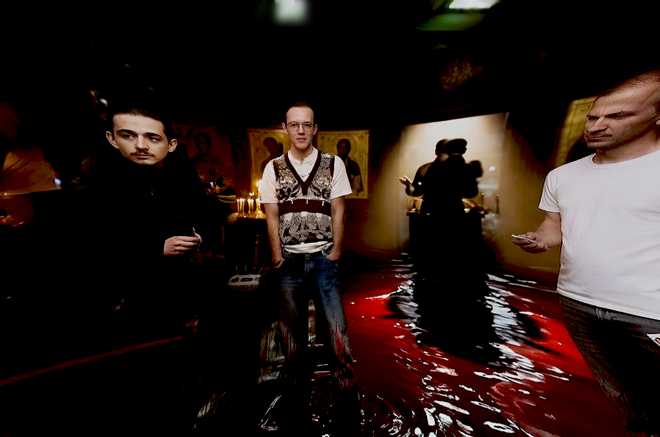
Cambridge Wordfest: the calm authority of a man who had meditated his way to invulnerability.
Timeline: The Descent
The End of Faith. Dogma is the enemy; reason is the weapon.
The Moral Landscape: well-being becomes the sole metric.
Contrarian years. Friends fall away; audiences shrink. Prices are paid.
Incentives reverse. The right enemy makes conformity profitable.
Lockdowns. The scourge of dogma enlists with the institutions.
“Horse dewormer.” Rogan and Weinstein filed under intellectual criminals.
Iran, AI, the manosphere — same measured tone, different anchor.
Rail loops continuously · Hover to hold Rail runs 2004 → 2026 · Swipe to scan
The irony was immediate and devastating. Harris's own moral framework — well-being as the sole criterion — should have demanded a scrupulous accounting of costs. Lockdowns devastated education, mental health, and economic stability for millions; coerced vaccination policies ignored natural immunity and inflicted side effects on the healthy; suppression of debate chilled scientific inquiry itself. Ivermectin, whatever its ultimate efficacy proved to be (and the evidence settled on marginal at best for COVID), posed negligible risk at approved doses. Yet Harris treated its proponents not as errant reasoners but as moral pariahs deserving censorship and contempt. The principle bent to fit the tribe.
This was no mere policy disagreement. It exposed the fragility of a morality tethered only to outcomes and stripped of transcendent restraint. Without an external anchor — call it God, natural law, or simple humility — reason can be conscripted to justify anything, provided the ends are framed as sufficiently noble. Harris framed his side as the defense of civilization against misinformation; therefore, any means became permissible. The man who once argued that ethics required no deity now demonstrated that ethics without humility devolves into tribal expediency.
The Uncounted Column
Bars indicate rhetorical attention paid, not magnitude of harm. The framework required both.
Word Map: The Lexicon Shift
The pattern persisted beyond the virus. Trump's return to power in 2025, followed by the predictable chaos, offered fresh terrain for the same reflexes. Harris has continued to portray the former president as an existential threat, a dictator in waiting whose every action confirms the apocalypse. Yet he has grown markedly more tolerant of institutional overreach when it serves his priors. The intelligence community's handling of Biden's decline? Understandable, perhaps even necessary, in the service of defeating the greater evil. Israel's conduct in Gaza, even as the war dragged into its third year and beyond, received consistent defense, with criticisms waved away as veiled antisemitism or moral confusion. By early 2026, as episodes of his Making Sense podcast grappled with an Iran conflict under Trump's erratic stewardship, Harris could be heard dissecting the administration's “shambolic messaging” while quietly endorsing the underlying necessities of confrontation.
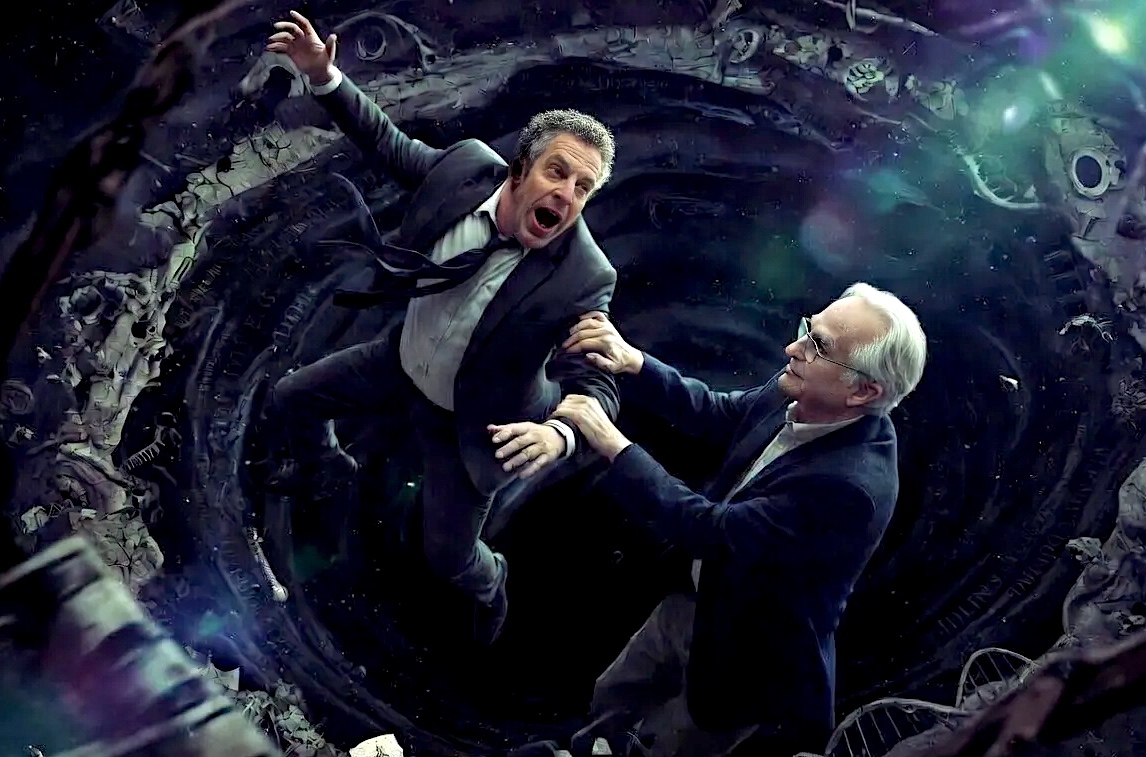
Bret Weinstein, meanwhile, has become the reluctant chronicler of this decline. In late 2025, responding to yet another clip of Harris blaming Rogan and “ivermectin cultists,” Weinstein delivered a verdict as blunt as it was memorable: Harris was the “stupidest smart person in the history of stupid smart people.” The line landed because it captured the tragedy precisely. Harris retains the apparatus of intelligence — the vocabulary, the composure, the air of dispassionate analysis — but deploys it in service of conclusions that increasingly defy scrutiny. The “stupid-smart” phase, as Weinstein once termed it, proved transitional. What followed was a near-total detachment from inconvenient evidence, a siege mentality that treats dissent as existential peril.
“The stupidest smart person in the history of stupid smart people.”
The Morality of Convenience
Why does a mind of such evident gifts squander itself this way? The answer lies less in malice than in the ordinary corruptions of status and belonging. Harris once paid real prices for contrarianism; friends fell away, audiences shrank. Post-2016, the incentives reversed. The prestige economy of liberal institutions rewards conformity when the enemies are properly chosen. Trump supplied the perfect foil: a vulgar, chaotic figure whose very existence justified any alliance, any rhetorical excess. Harris discovered that defending censorship, excusing elite obfuscation, and maintaining unyielding hostility cost him nothing in the circles that now sustain him. On the contrary, it conferred a kind of moral glamour — the last honest man in a world gone mad.
The spectacle is not funny, though it has elements of farce. It is disturbing because it illustrates how easily a secular saint can become a sectarian enforcer. The empty circle Harris once drew around “well-being” now stands revealed: a perfect ring with nothing at the center, endlessly rotating to accommodate the latest doctrinal demand. Atheism, it turns out, guarantees no immunity to dogma; it merely changes the source. When the only referee is the applause of the enlightened, the game is rigged from the start.
One might pity the man. He meditates daily, presumably seeking equanimity amid the storm of his own contradictions. Yet pity is hard to sustain when the contradictions keep multiplying. In podcast after podcast — through Iran wars, AI disruptions, conspiracism, the manosphere — Harris speaks with the same measured tone, as though nothing has changed. But everything has. The neuroscientist who promised objective morality now offers only the morality of convenience.
Humanity does indeed have a duty to kindness, even toward those who have become repugnant in their certainty. But kindness does not require illusion. Sam Harris once seemed above the average run of minds — clearer, braver, more rigorous. To watch him trade that gift for the comforts of tribal affirmation is to witness a quiet, self-inflicted tragedy. Not the fall of a titan, perhaps, but the slow erosion of a man who convinced himself that reason could never betray him. It can, and it has. The record is there for anyone willing to look without sentiment.
The Scorecard
A brilliant engine running on a corrupted map.
Pros & Cons
Scores reflect this desk's reading of the public record, 2004–2026. Opinion, offered without sentiment.