Arnold Allen Is Not Furniture
They called him furniture. That is how you apologize for a main event, not sell one.
WHAT IS THIS. Who calls people furniture? Why isn't this fight card sold in their own write-ups? Because someone phoned it in. Christ, it is like reading a boring style sheet.
Here is the offending paragraph, lifted verbatim from the official UFC site:
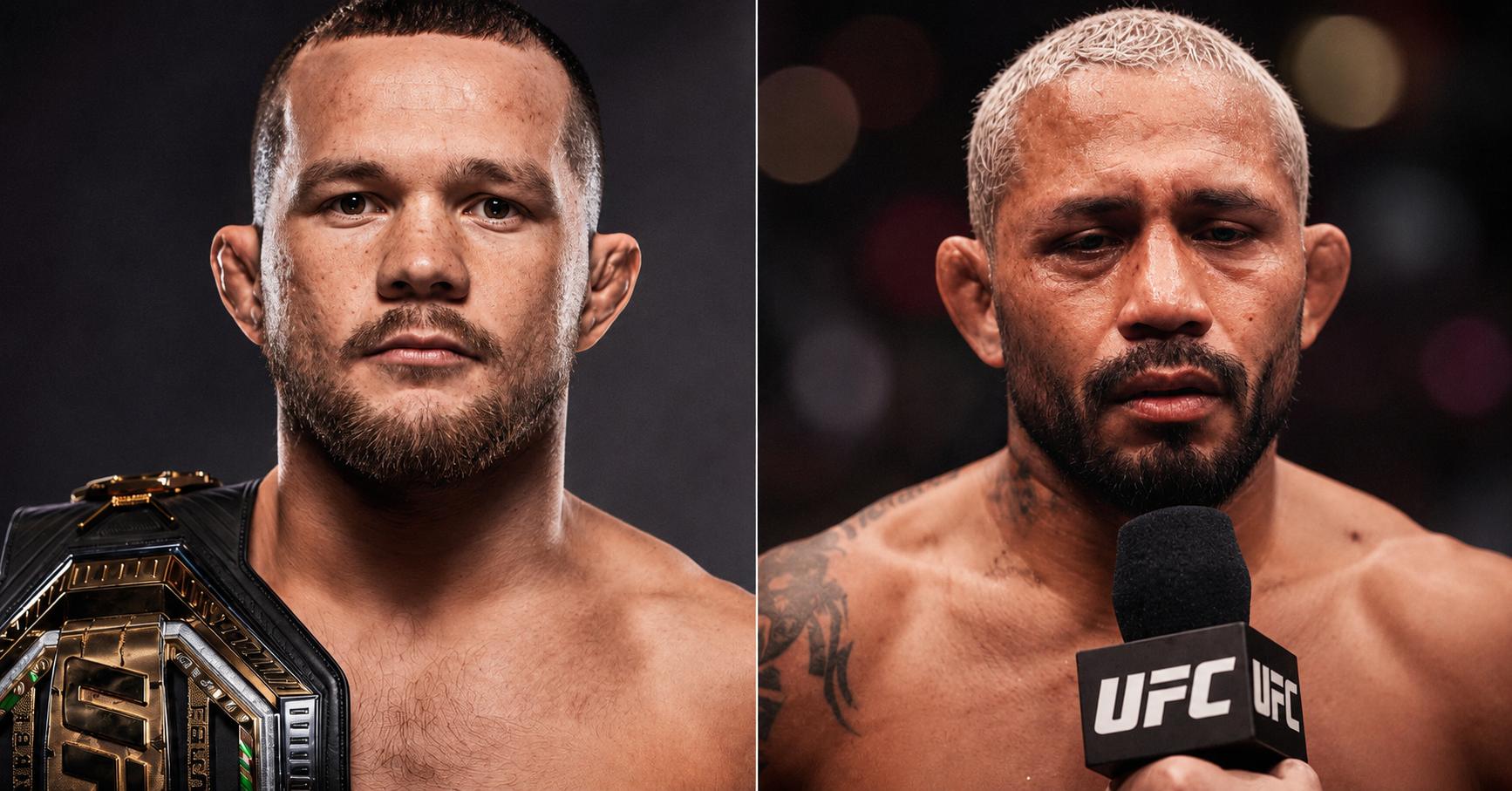
Arnold Allen has been a part of the UFC furniture for more than a decade, but he's still in the prime of his career . Saturday night, Allen returns to action against Brazil's Melquizael Costa in the main event, where the Englishman will look to turn back the in-form Brazilian and bounce back from his recent defeat in the process.
"Part of the furniture" is a British idiom. It means someone has been around so long they're basically a permanent fixture. In an office, a pub, a club, it can be affectionate. For a UFC fighter, it lands like a coroner's report. It makes Arnold Allen sound like upholstery instead of a dangerous featherweight contender. And the punchline kicker — "but he's still in the prime of his career" — accidentally makes it worse, because now the sentence reads:
Arnold Allen has been sitting in the room for years, but somehow he's not washed.
That is not selling a main event. That is apologizing for one.
Phoned-In Copy Is Anti-Promo
The real problem is structural. This is template prose. Strip the names off and it could describe four hundred other fight nights:
Longtime UFC veteran returns against in-form Brazilian, looking to bounce back from recent defeat.
There is no angle. No danger. No stakes. No reason Costa matters. No sense of Allen's actual identity as a fighter. No "why this main event is interesting." Someone reached for mainstay , fixture , staple , longtime presence , and landed on the one phrase that makes the athlete sound like a sectional sofa.
A better version would frame it around tension:
Arnold Allen has spent more than a decade doing the hard thing — staying relevant in one of the sport's most unforgiving divisions. On Saturday, the English featherweight gets no soft reset. Across from him is Melquizael Costa, a surging Brazilian who arrives with momentum, violence, and the chance to turn Allen's comeback fight into his own arrival party.
That already does more work. It says Allen is established. Costa is not filler. The fight has stakes. The main event has a reason to exist.
The Fish And Chips Was Right There
Buried in the same write-up: Allen got the fight offer late one night, right after eating a bad plate of café fish and chips. His manager called at ten p.m. — would not even say who the opponent was — and asked what he was weighing. Allen rolled out of bed, stepped on the bathroom scale, decided he was good, and signed up.
That is funny. That is fight-life ridiculousness. A featherweight contender's main-event slot decided by a Tuesday-night chippy and a domestic scale. The copy treats it like a police report.
The Tyson Principle
Mike Tyson said he would murder people. He could have. He didn't. That distance — between what the language threatens and what the man actually does — is the entire point of fight promotion.
Tyson understood the theater of credible danger. When he said violent, insane things in front of a microphone, the selling point was never that he literally intended to commit homicide on broadcast. The selling point was that the audience believed there was a nonzero spiritual overlap between the quote and the man. He made the fight feel like a civilizational breach: this is not a sporting event, this is a containment failure with judges nearby.
Combat sports run on a weird bargain.
"The violence is real. The murder is fake. The audience pays for the tension between those two facts."
No, the UFC writer does not need to literally write "I hope Allen kills Costa." But somebody in the room needs to understand the emotional version of that sentence. They need to write like the fight matters to the fighter's pride, future, ranking, mythology, and ability to look himself in the mirror Sunday morning.
Instead they write like they are introducing a panelist at a regional sales conference.
The Streaming Layer Makes It Worse
The other half of the same problem: the writing gets softer while the viewing path gets more confusing, so the promotion needs to work harder, not less.
The old UFC flow was annoying but legible. Is this a PPV? Buy it or don't. Prelims here, main card there. The whole machine was built around the event. The Paramount+ version should be easier — official copy says UFC numbered events and Fight Nights are included with a subscription, no PPV upsell, with select numbered events simulcast on CBS. But "easier" only works if the platform makes the event feel impossible to miss.
Instead, the viewer has to wonder: where is the live tile? Is it under Sports? UFC? Live TV? CBS? Paramount+ Originals? Are prelims separate from the main card? Did the card page change? Why does the app make me hunt for the thing it paid $7.7 billion to acquire?
Paramount bought urgency and then hid it inside a filing cabinet.
For Allen versus Costa: prelims at 5 p.m. ET, main card at 8 p.m. ET, Saturday, on Paramount+. That should be screaming from every surface. Not buried. Not treated like "content availability." A fight card is not a library item. It is a fuse.
The Carnival, Not The Library
The old PPV model forced the UFC to behave like a carnival. Loud posters, clean stakes, hard sell, "you will regret missing this." The subscription model tempts everyone to behave like librarians:
New UFC content is now available.
That is death. Combat sports need ritual, countdown, hierarchy, and threat. The viewer should open Paramount+ and immediately feel: oh, that's tonight, that's the thing, that's the door.
One man is trying to prove he still belongs near the blade's edge. The other is trying to turn that proof into a career obituary. That sells Allen. That sells Costa. That sells the stakes.
"Part of the furniture" is what you write when you're afraid of the product. Fight copy should sound like it knows the cage door locks.