Seventeen Million Witnesses
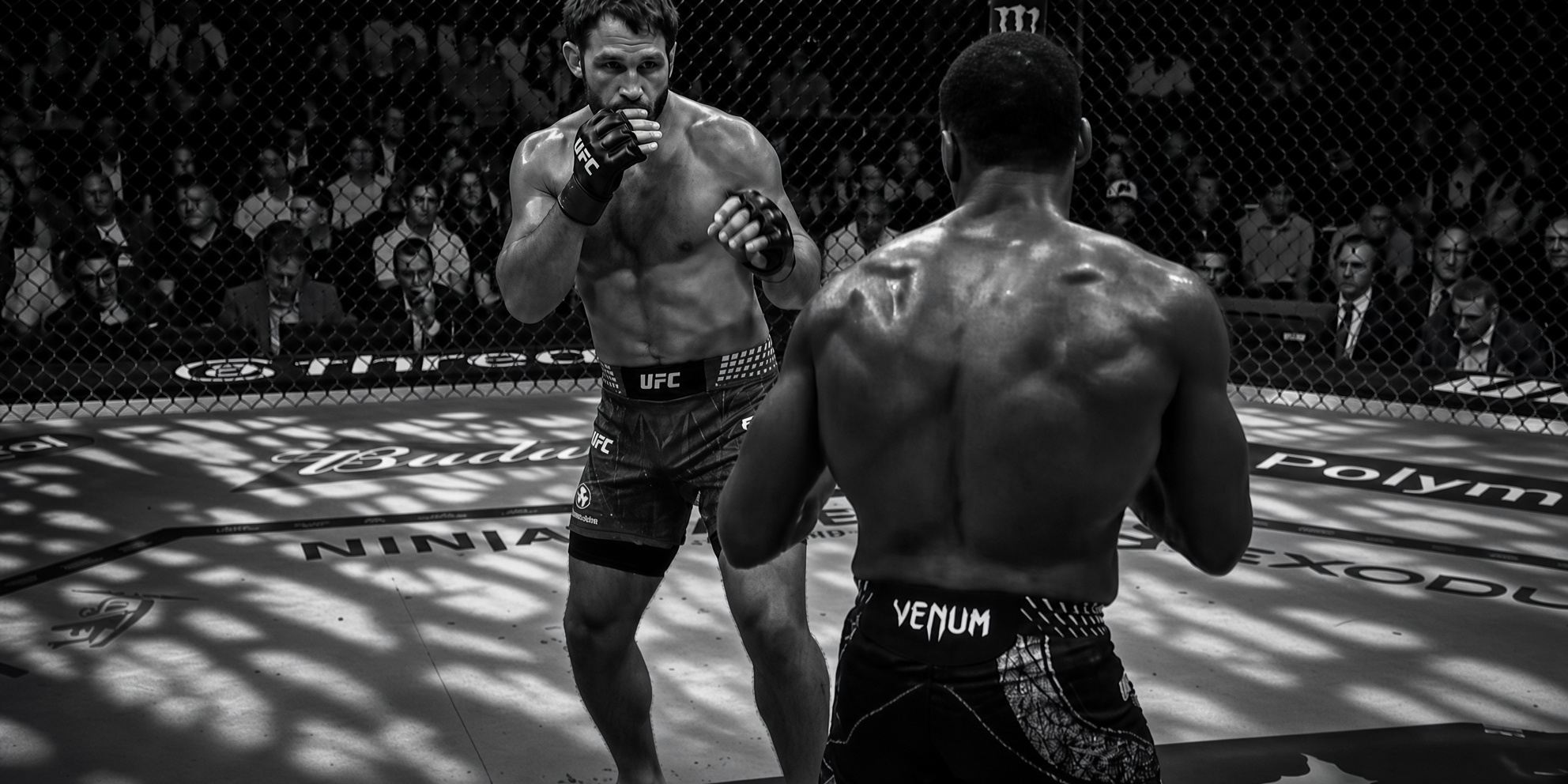
The South Lawn had been cleared and leveled for the occasion, the grass cut to a military uniformity and the cage set down with the White House portico framed behind it like a stage set. The ground there falls away toward the Ellipse, and the fall had been leveled out for the night. They called the structure The Claw. An eighty-seven-foot canopy kept the rain off the canvas and the television cameras in position, a temporary roof raised over a building that already had one. Floodlights turned the evening into a bright, hard noon. The Marine Band played the anthem. The fighter walkouts began at the residence itself, the competitors emerging from the President's house and crossing the lawn to the cage, a procession no promoter could have staged anywhere else and no government had staged before. Seventeen million people watched on Paramount+.
Donald Trump sat cage-side between his wife and Dana White. It was his eightieth birthday and it was Flag Day, and the card had been sold as part of the coming national anniversary, the two-hundred-and-fiftieth year since the Declaration. Three occasions had been folded into one evening, and the folding was deliberate; the event drew its license from the convergence. Tickets were by invitation only. Roughly twelve hundred seats went to active-duty service members, placed where paying customers sit at any other card. The rest were divided between the administration, the promotion, and its sponsors. The Ellipse, a short walk away, was opened for public viewing, and the public watched from there or from the stream. No one paid to sit on the grass in either place. The fight was free to attend and impossible to attend, depending on the invitation.
White had described the night in advance as once in a lifetime and never again. The line was accurate in both directions, and accurate in a way he may not have intended. The logistics alone made repetition unlikely. Seven hundred thousand dollars in sod had to be replaced afterward, the lawn torn up by the weight of the structure and the traffic of the production and then laid down new, so that the ground itself was consumed and reissued. The District of Columbia Combat Sports Commission declined to issue the usual permit and would not recognize the results for official records. The fights would happen and would not officially have happened; the men would win and lose in front of seventeen million witnesses and the record would show nothing. The Association of Boxing Commissions supplied the judges and referees instead, an outside body standing in for the local one that had refused. A lawsuit filed days before the event argued that the use of federal property for a commercial fight constituted an improper benefit. A federal judge declined to stop it, and the question of whether the lawn could be lent for the night was answered by letting the night proceed.
Inside the cage the action required no additional justification. Every bout on the main card ended inside the distance, the first time in UFC history that a numbered card produced that result across the board. The imported judges sat through the evening without a decision to render. Nothing was left to the scorecards. Each fight ended with one man unable to continue, the only kind of result that needs no commission to certify it.
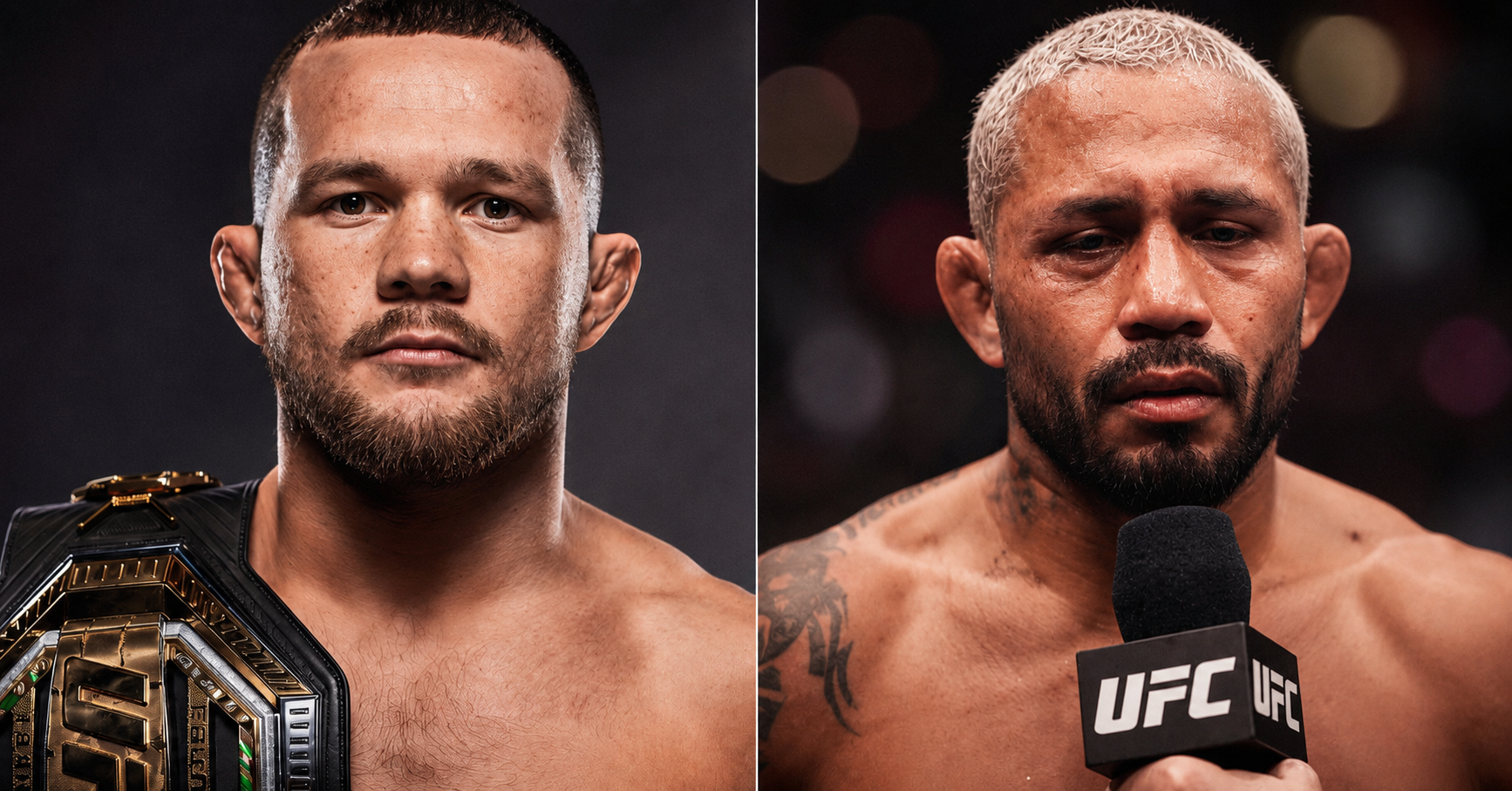
Justin Gaethje and Ilia Topuria fought for the undisputed lightweight title. Topuria had not lost in seventeen professional fights and had never been made to look ordinary. Gaethje, at thirty-seven, had been written off more than once, and the writing-off had its logic; his style spends the man who uses it. For three rounds the younger man hurt the older one with body shots and threatened submissions, and for three rounds Gaethje took the damage and kept walking forward, the one thing he had ever promised to do. In the fourth he broke Topuria down with volume and pressure until the corner stopped it at the five-minute mark. Topuria left with a broken nose and orbital fractures. Gaethje left with the belt, having won the way he always said he would, by refusing to be the one who stopped.
Ciryl Gane met Alex Pereira in the co-main event for the interim heavyweight title. Pereira had moved up from middleweight with the stated intention of becoming the first three-division champion, a plan that depended on his power translating upward. Gane used speed and angles that heavyweights rarely possess and gave the power nothing to land on. He hurt Pereira with a jab early in the second round and finished him with strikes at one minute and twenty-seven seconds. Pereira looked smaller than the division usually demands, and the ambition that had carried him up two weight classes looked, for the first time, like a miscalculation.
The rest of the card answered in kind. Sean O'Malley stopped Aiemann Zahabi in the second round with a right hand that ended the night cleanly, no follow-up required. Josh Hokit, still undefeated in the UFC, took Derrick Lewis apart over two rounds with movement and volume the older heavyweight could no longer answer. Maurício Ruffy dropped Michael Chandler with an uppercut and finished him with a spinning wheel kick and follow-up punches in the first round. Bo Nickal submitted Kyle Daukaus with elbows and strikes after an early takedown. Diego Lopes came back from an early knockdown to knock out Steve Garcia in the second, hurt first and finishing anyway.
The production treated the violence as ceremony rather than spectacle, and the distinction governed every choice. Entrances were timed to the second. The canvas carried no commercial patches beyond the standard UFC markings and the event logo, kept clean of the advertising the promotion never forgoes elsewhere. The referee's instructions were audible on the broadcast, the discipline of the thing made part of the show rather than hidden beneath it. A doctor remained at ringside throughout. Nothing about the evening played as excess, and the excess was held off precisely because the setting could not absorb it. A fight at the White House had to be conducted with more restraint than a fight anywhere else, because the venue supplied the spectacle and the fights were left to supply only themselves. When the cage was struck at the end of the night the field returned to its previous state within days. Only the replaced sod marked where the structure had stood.
White's description held. The event existed once because the combination of venue, timing, and political permission could not be repeated without turning the exception into routine, and an exception that becomes routine is no longer an exception but a precedent. The promise that it would never happen again was the condition that allowed it to happen at all. The fights themselves required no defense. They were conducted under rules, observed by physicians, and settled by results that left no ambiguity. The lawn absorbed the weight and returned to its previous appearance.
What remained was the record of what had been permitted on that particular stretch of grass on that particular evening, and the statement that it would not be permitted again. The District of Columbia had refused to keep that record. Seventeen million people kept it instead.