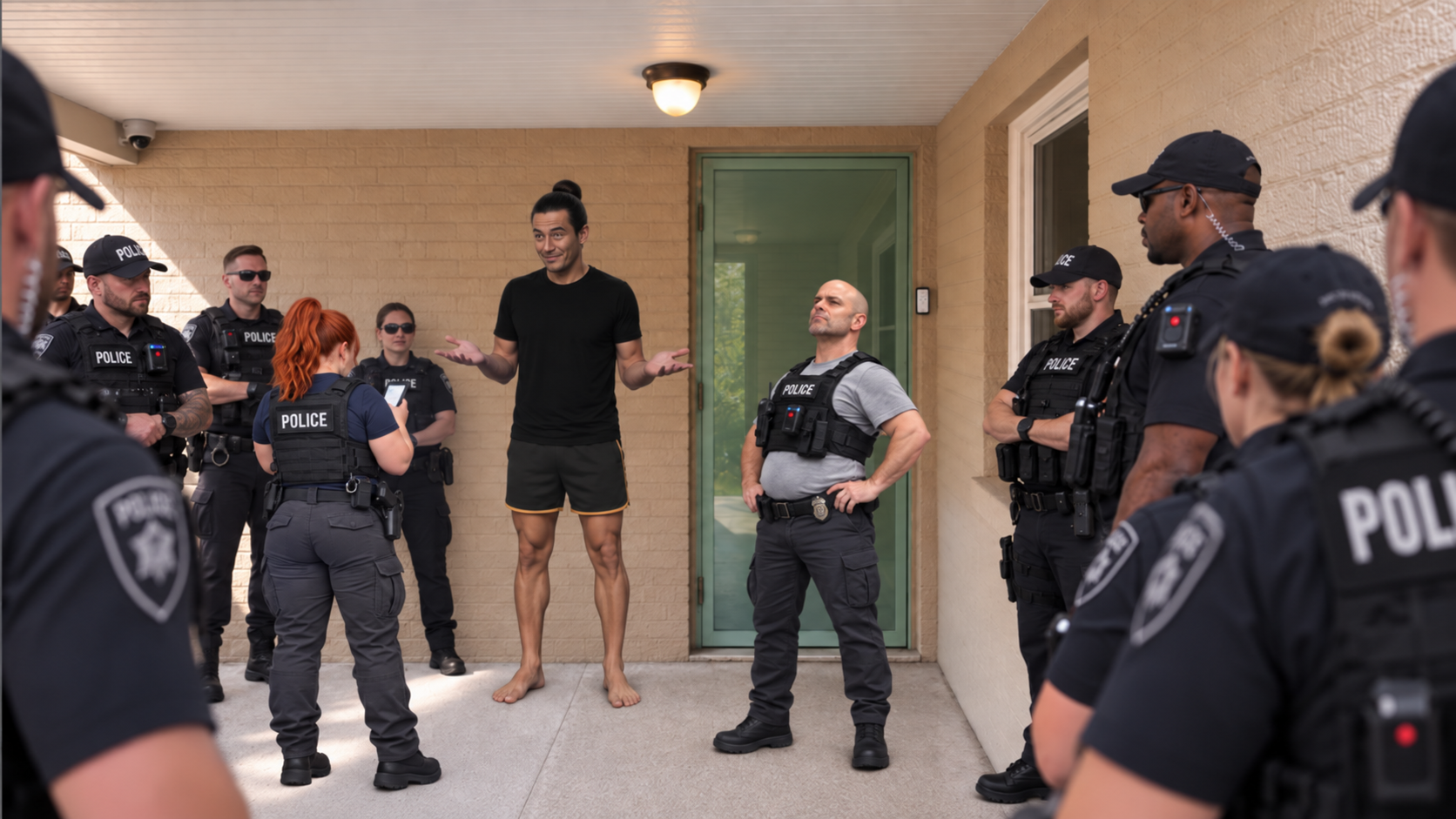
The Kneepads of Rev. Sabrina
One does not require a puritanical disposition to recognize the spectacle of Sabrina Carpenter as the perfect contemporary parable: a young woman who has risen to the summit of popular culture by the diligent simulation of erotic submission, now indignantly clutching her pearls when the state borrows her music to advertise the forcible removal of criminals from the republic. The irony is so rich it could finance another tour.
Miss Carpenter is, in essence, the John Lithgow character from Footloose , transplanted from the pulpit to the pop chart, only without the courage of Lithgow's convictions. The Reverend Shaw Moore at least believed dancing because he feared it might lead to independent thought and carnal knowledge. Miss Carpenter affects to despise the very notion of rhythmic competence while spending her professional life on her knees, hand cupped in vulgar pantomime, lips parted in rehearsed ecstasy for the delectation of fourteen-year-olds and arrested adolescents. She does not forbid the dance; she merely ensures that what replaces it is a soft-core semaphore of availability, the sort of gesture one might once have expected to encounter in the back row of a provincial cinema rather than on the stage of Madison Square Garden.
The White House, with the blunt instrumentality of a government TikTok account, set one of her ditties to footage of federal agents arresting convicted rapists and murderers pending deportation. The song in question concerns, if memory serves, the delights of being "knocked up" by a careless lover. The aesthetic mismatch was jarring, but hardly more jarring than the original lyric. Miss Carpenter's response was to declare the montage "evil and disgusting," as though the real obscenity were the cuffs on a child molester rather than her own lucrative habit of miming fellatio for pocket money.
There is, of course, a pattern. When required to move in any way that demands genuine musicality, she freezes. The body remains a stranger to the beat; the limbs appear borrowed from a mannequin that has only recently been granted the miracle of animation. So she defaults to the one posture she has mastered: prostration. It works on stage, where the gesture is sold as empowerment, and it works on social media, where the same posture is rebranded as moral horror. The kneepads, metaphorical and perhaps literal, are simply transferred from the bedroom farce to the public square.
Meanwhile, the Border
Thus the poetic justice is exquisite. A performer who has made a fortune persuading the young that sexual abasement is a form of liberation discovers that her art can be repurposed to illustrate the consequences of lawlessness. The same knees that buckle for applause now buckle in theatrical outrage. One almost feels pity, until one remembers that the entire edifice of her fame rests on the conviction that thinking is superfluous and dancing is optional, provided one is willing to drop low enough, often enough, for the cameras keep rolling.
A Timeline of the Closing Door
In the end, Miss Carpenter is not a victim of the culture wars. She is their ideal product: a singer who cannot sing, a dancer who cannot dance, a thinker who dare not think, forever on her knees and astonished to discover that the world sometimes kneels for reasons other than applause.