Apple’s Platinum-Plated Cash Incinerator
A critique of Apple TV+’s Margo’s Got Money Troubles , a “hollow echo” of prestige—a production where massive corporate capital is used to purchase expensive signifiers (like Michelle Pfeiffer and high-end lighting) while carefully avoiding the narrative grit and “cruelty” required for actual art.
Apple’s latest bauble, Margo’s Got Money Troubles , arrives on its streaming service with all the discreet ostentation of a private jet idling on the tarmac while its owner lectures the world on fiscal restraint. One need only glance at the corporation’s balance sheet—another quarter of galactic revenue, another $100 billion buyback authorization, another modest dividend increase—to understand the deeper comedy. Apple is not short of cash; it is short of courage. It has the rare luxury of underwriting genuine invention and chooses instead to play the part of the anxious dividend aristocrat, shrinking its share count with mechanical piety while its entertainment division assembles prestige by the yard. The result is not art but a kind of corporate performance art: expensive, tasteful, and hollow enough to echo.
Consider the arithmetic for a moment, because the arithmetic is the argument. The buyback program now exceeds the lifetime production budget of every studio in the New Hollywood era combined, adjusted and unadjusted, with room left over for a Criterion box set of every film Coppola made before he started selling wine. A fraction—a rounding error, really, a decimal place that wandered off the spreadsheet—would fund a decade of genuinely strange, genuinely risky cinema. Instead the money returns to shareholders in the form of a slightly tighter share count, and the entertainment division is handed a budget calibrated to produce the appearance of cultural participation without the inconvenience of cultural consequence. The entire operation runs on the assumption that the audience cannot tell the difference between investment and laundering. The audience, increasingly, can.
Margo’s Got Money Troubles is the perfect specimen. Its very title is an irony so blunt one almost admires the nerve. Here is a story ostensibly about penury, improvisation, and the grubby arithmetic of survival, bankrolled by a company that treats supporting roles as occasions for executive-producer fees and Vanity Fair cover shoots. The premise alone—young woman, unplanned pregnancy, OnlyFans as economic lifeline—wants the texture of actual desperation: the smell of a microwave at 2 a.m., the specific humiliation of a declined card at a gas station, the way poverty rearranges a person’s vocabulary until every sentence becomes a negotiation. What it gets instead is the texture of a Nancy Meyers kitchen with the lights dimmed slightly to suggest hardship. The countertops are still quartz. The anxiety is still catered.
Elle Fanning is game as the chaotic young Margo; Nicole Kidman and Nick Offerman and Greg Kinnear lend their familiar auras of premium dysfunction. But the crown jewel of the enterprise—the one performer who actually deserves the deference—is Michelle Pfeiffer, cast as the mother and elevated to executive producer. She remains, as she has been since Scarface , a wonder: beauty sharpened to a blade, intelligence that never stoops to explanation, a voice that could make a grocery list sound like a verdict. To watch her in this production is to feel the specific ache of seeing a Stradivarius used to accompany a lounge act. She is not merely good; she is the only element that feels inevitable, the only reason the whole confection does not collapse into its own good taste. There is a particular cruelty in casting Pfeiffer for what she represents and then declining to use what she actually does. She is summoned for the silhouette and dismissed for the substance—an executive producer credit functioning, one suspects, as a kind of structural apology for the role itself.
The trouble begins, as it so often does in prestige television, with the narration. Young Margo talks us through her own predicaments in the present tense, a device that collapses the distance between experience and reflection into a single, airless monologue. One thinks of The Wonder Years , where the adult voice carried the scar tissue of hindsight and the quiet shame of revisionism—Daniel Stern’s narration was an instrument for adult Kevin to lie gently to himself about boyhood Kevin, and the audience was permitted to catch the lie. One thinks too of Sunset Boulevard , where the narrator was already a corpse in a swimming pool, every word arriving with the weight of a man explaining how he came to be face-down in chlorinated water. Narration, when it works, is a temporal contract. The past speaks to the present and the present negotiates with the past, and the audience, listening, is allowed to feel the gap between what was felt and what is now understood. Here the narration is mere captioning: the character explaining herself while she is still busy being herself. It is the storytelling equivalent of a restaurant printing its menu on the plate.
The obvious, almost criminal solution would have been to give the voice to Pfeiffer. Let the older Margo speak across the years—regretful, possibly dishonest, certainly polished by whatever bargain she struck with the world. The audience would have done the work instantly: That voice over this girl? What happened in the intervening decades? How does the raw material become the artifact? Every cut would have carried a small cargo of dramatic irony; every reckless decision by young Margo would have been freighted with the older woman’s foreknowledge. The casting expense would have justified itself a hundred times over—Pfeiffer’s voice as the show’s actual spine, her presence in the present-tense scenes as confirmation of what her narration had been hinting at all along. Instant voltage, earned prestige, a formal justification for the casting expense rather than an ornamental one. Instead, the show treats Pfeiffer as expensive wallpaper. One can almost hear the notes from the room: We got Michelle; now let’s make sure everyone notices. Notice, in the executive lexicon, has replaced use as the verb of choice. A star is now something to be glimpsed rather than spent.
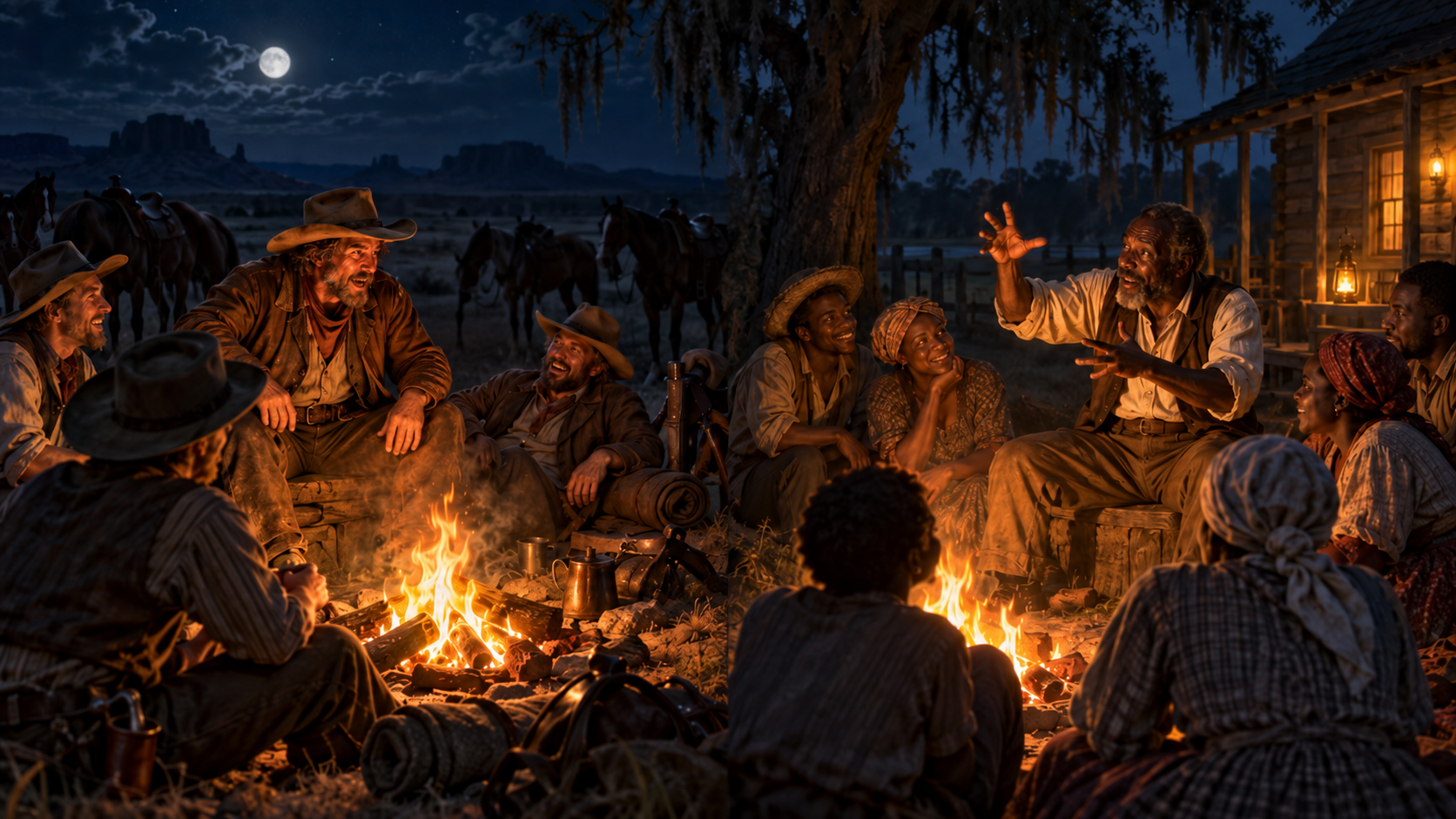
The same timid conventionality infects every other choice. The carnie father is kept at a mythic distance, so Margo’s outgoing personality arrives as a gift from the script gods rather than the inheritance of a vivid, intermittent wound. A father who appeared long enough to teach her the patter, the smile-through-broke, the reading of marks—that would have given her charm a source and her desperation a shape. Charm without etiology is decoration; charm with a wound underneath is character. The carnival is among the great American theatrical inheritances, a closed economy of misdirection that has produced everyone from P. T. Barnum to the modern political consultant, and the show has somehow contrived to wave at it from across a parking lot. A single scene of the father teaching young Margo how to spot a mark—how to read the wallet by the shoulders, how to laugh at the right moment to loosen a stranger’s grip on his money—would have done more for the show’s premise than the entire pilot does. The OnlyFans economy is, after all, a carnival booth in digital drag. The ring toss is now the subscription tier. The barker is now the algorithm. The father’s absence in the show is the absence of the show’s own intellectual self-awareness about what it is depicting.
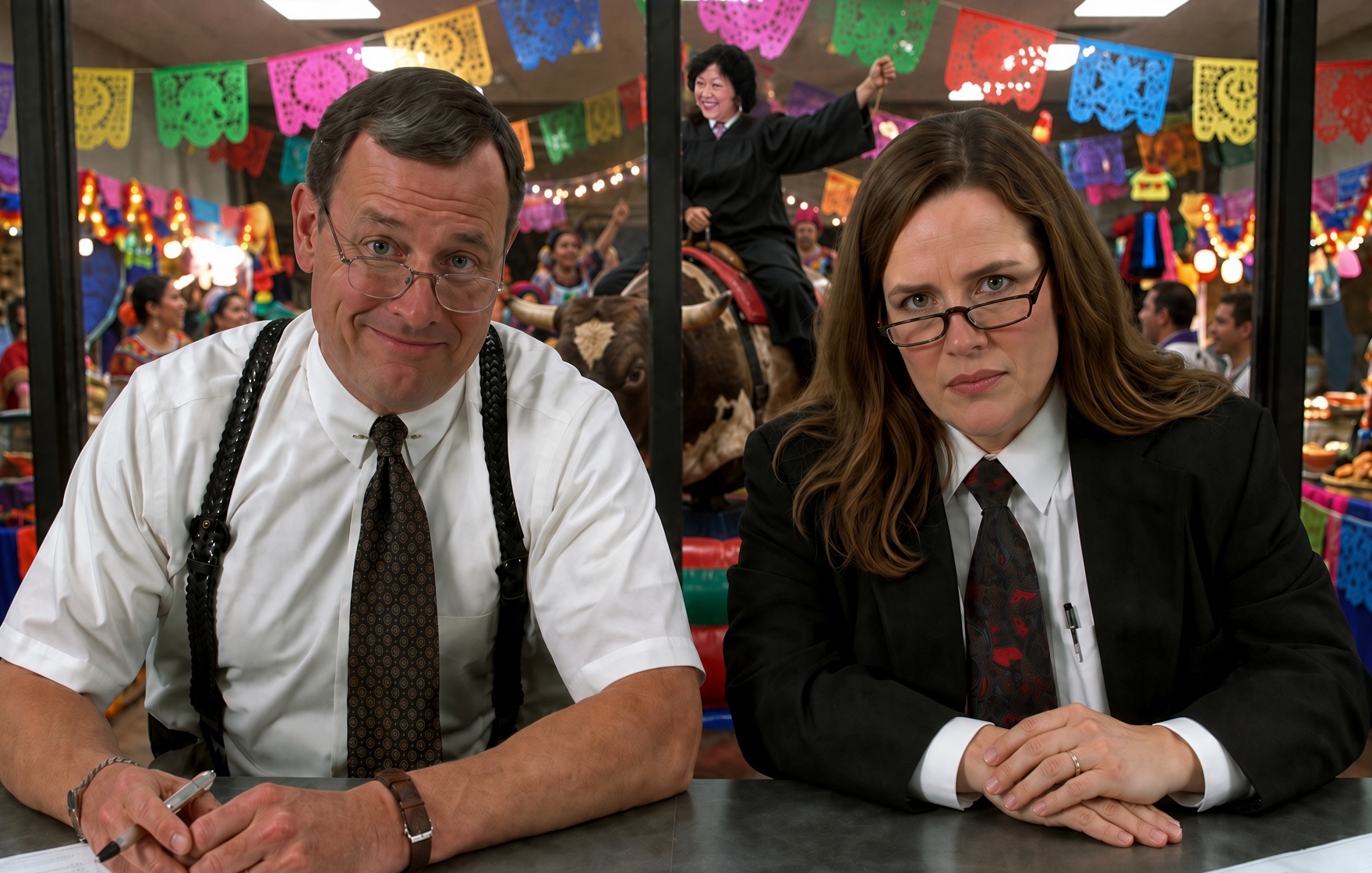
Greg Kinnear, meanwhile, is deployed in some safer, more decorous capacity; one can only imagine what a wrestler he might have made. Kinnear’s particular talent is for affable menace, the salesman who can break your arm while discussing the weather—watch him in Little Miss Sunshine , watch him in Auto Focus , watch the way he can hold two contradictory emotions in a single shot without ever appearing to strain. Placed inside the squared circle he would have embodied the carnie economy itself: violence as customer service, humiliation as choreography, survival as performance. Wrestling is the last honest American art form precisely because it admits its dishonesty up front; it is the only theatrical tradition that signs a written contract with the audience to lie beautifully. A wrestler-uncle, a wrestler-mentor, a wrestler whose body is a ledger of the lies he has been paid to tell—that is a character. That is a thematic engine. Instead the show casts labels rather than tensions and wonders why the machinery feels oiled but inert.
Then there is the sex. Gratuitous, yes, but worse: inherited. Apple TV+ has borrowed the old HBO grammar—hard cut from exposition to naked bodies, dialogue continuing over the flesh as though nudity were punctuation—and executed it in the cramped, over-lit interiors that have become the service’s unfortunate signature. There is a particular Apple TV+ visual register that one begins to recognize after enough exposure: every interior lit as though for a real estate listing, every exterior color-graded toward the same anxious teal, every bedroom appointed with the linens of a mid-tier boutique hotel in a secondary market. The shows look less like they were photographed than like they were staged for a relocation brochure. Game of Thrones at least had the decency to be ridiculous on a grand scale; here the effect is merely mechanical, the executive note made visible. Sex as scene lubricant, sex as proof of maturity, sex that reveals nothing about power or money or self-invention. One stares at the ceiling with one’s in-laws and waits for the show to stop proving it has an adult badge.
The deeper failure is conceptual. A show about OnlyFans should understand, at the molecular level, that contemporary sex work is not about sex but about labor—the management of attention, the discipline of the parasocial, the strange new arithmetic by which a woman becomes simultaneously the product, the marketing department, and the customer service line. The job is essentially that of a small-business owner who has been talked into using her own body as the inventory. None of this is in the show. The show treats the platform as a plot device, a way to generate money that the camera can then film being spent in increasingly photogenic locations. The actual texture of the work—the lighting rigs in cramped apartments, the spreadsheet of subscriber retention rates, the slow erosion of one’s capacity to distinguish private from performed affection—is left entirely unexamined. One begins to suspect that no one in the writers’ room ever opened the application long enough to understand what it actually is.
The pregnancy revelation is handled with equal timidity. A bathroom, a test, a flatline of panic, a conversation with the boyfriend that carries all the dramatic weight of filing paperwork. No ultrasound first to make the fact undeniable before anyone can posture; no summoning of the wrestler as a panic response, turning private terror into public spectacle. The missed opportunity is almost tragic. A wrestler explaining pregnancy in the language of the squared circle—Brother, life comes at you from the top rope—would have been vulgar, funny, and true to the show’s own logic of performance as survival. It would also have been a thesis statement: that this family, this woman, this entire economy of small American hustles, has only one register available for catastrophic news, and that register is showmanship. The catastrophe must be performed before it can be felt. That is a real insight about the country the show is set in. Instead the scene is allowed to be merely an event, not a pressure chamber. It happens. The plot advances. We move on.
Even the music betrays the same rented imagination. A Rolling Stones needle drop arrives like a licensing invoice wearing sunglasses—rebellion pre-approved by legal, danger laminated for your protection. Young advertising professionals have been reaching for “Start Me Up” since the Paleolithic; Apple TV+ has simply scaled the laziness to feature length. There is a particular tell in contemporary prestige television: the more expensive the needle drop, the less the show trusts its own scenes to carry weight. A thrifty score, an unfamiliar B-side, a piece of music the audience has not already metabolized through three decades of car commercials—that is the choice of a production confident in its own atmosphere. The famous song deployed without irony is the choice of a production hedging against its own thinness. Apple’s library is bottomless; its imagination, on this evidence, is approximately the depth of a Spotify “Songs Your Boss Likes” playlist.
There is one sequence, almost accidentally, that works. Inside Bloomingdale’s the world still obeys a code: manners as lighting, commerce as ritual, presentation as the last shared language. Pfeiffer gliding through those counters feels right; she is not selling, she is evidence. Evidence of what? Of a vanished American grammar in which the surfaces of public life were maintained as a courtesy to strangers, in which a department store was a kind of secular cathedral where one rehearsed the manners of a class one might one day belong to. Watch her hand pass over a glass counter and you can feel the entire postwar bargain in the gesture: aspiration as decorum, decorum as a form of hope. Then Margo and company step outside and the tension finally begins—because outside is where the script ends and the real arithmetic resumes. Outside, the country has stopped pretending. The sidewalks no longer perform civility; they merely transmit appetite. The sadness is that the department store has become the final sanctuary of civilization while the street offers only appetite and consequence. It is the one moment the show seems to understand its own premise. One almost wants to write to the producers and beg them to build the rest of the season around that single architectural insight: inside, code; outside, hunger; Margo, somewhere in between, trying to learn which face to wear at which threshold.
But the show will not do this, because the show is not actually interested in the country it is set in. It is interested in the genre it is set in. And here we arrive at the deeper indictment, the one that goes beyond Margo and reaches the entire enterprise. Apple TV+ is not making television about America; it is making television about other television. Every choice is a citation. The narration cites The Wonder Years without understanding it. The sex cites HBO without inheriting the swagger. The needle drops cite Scorsese without earning the velocity. The casting cites prestige without trusting the actors to do prestige work. The shows are assembled the way a moderately educated person assembles a bookshelf for a real estate showing: the spines suggest a reader, the contents are immaterial, and at no point will anyone open a volume.
David E. Kelley and his fellow architects of the Apple formula have assembled every expensive signifier—star power, tasteful chaos, literary voice-over, adult content—and neglected the only thing that matters: meaning that has been fought for rather than purchased. They do not lack ambition; they lack the cruelty to protect it. Cruelty, in this context, is a virtue. It is the willingness to cut the famous name, to lose the licensed song, to refuse the executive producer credit, to tell a beloved actress that her role does not exist yet and may never exist. It is the willingness to make something that does not flatter every constituency at the table. The famous showrunners of the prestige era understood this. David Milch would have set fire to the script before he allowed Pfeiffer to be wallpaper. David Chase would have cut the narration with a paring knife. David Simon would have spent six episodes inside the actual economics of the OnlyFans platform before he let a single sex scene into the edit. Those men were cruel to their material because they loved it. The current crop loves nothing but the meeting at which the material is approved.
A tough babysitter in the writers’ room—someone willing to ask why this famous person is here, whether this narration earns its keep, whether this sex scene does anything but blink the maturity light—might have salvaged a real show from the expensive ingredients. Instead we are left with the familiar spectacle: Apple mistaking capital return for vision, mistaking a star-studded cast list for drama, and mistaking the audience’s willingness to watch for our inability to notice the difference.
And here, finally, is the thing that must be said plainly. The richest company in the history of capitalism has acquired the means to fund any artistic vision it can imagine, and what it has imagined is a competently lit drama in which Michelle Pfeiffer is not allowed to speak as much as she should, in which a story about poverty is photographed like a furniture catalog, in which the sex is dutiful and the music is rented and the narration is a hand on the audience’s shoulder telling it what it just saw. This is not a failure of resources. It is a failure of nerve so total, so structurally embedded in the corporation’s relationship to its own money, that it has become indistinguishable from policy. The buybacks are the show. The show is the buybacks. Both are mechanisms by which capital is converted into the appearance of activity without the risk of consequence. Both produce a slightly tighter share count and a slightly larger pile of received opinion, and neither produces anything that will be remembered in a decade.
Margo has money troubles. Apple, alas, has none—and that is precisely the problem. The poverty in this show is fictional. The poverty behind it is real, and it is a poverty of conviction, of taste, of the basic conviction that art is something other than a line item in the cost of seeming serious. One closes the laptop and thinks of Pfeiffer in that department store, gliding past the counters, knowing exactly what the show should have been and unable, even from the executive producer’s chair, to make it so. That is the truest scene Apple has ever filmed, and it filmed it by accident.