California Dreamin'
It is commonplace to hear someone assert, with full authority, that President Trump’s decision to confront Iran—from nuclear program to conventional forces—is the reason for current gas and diesel prices. Never has a confident assertion been more wrong. And it is wrong from the first premise.
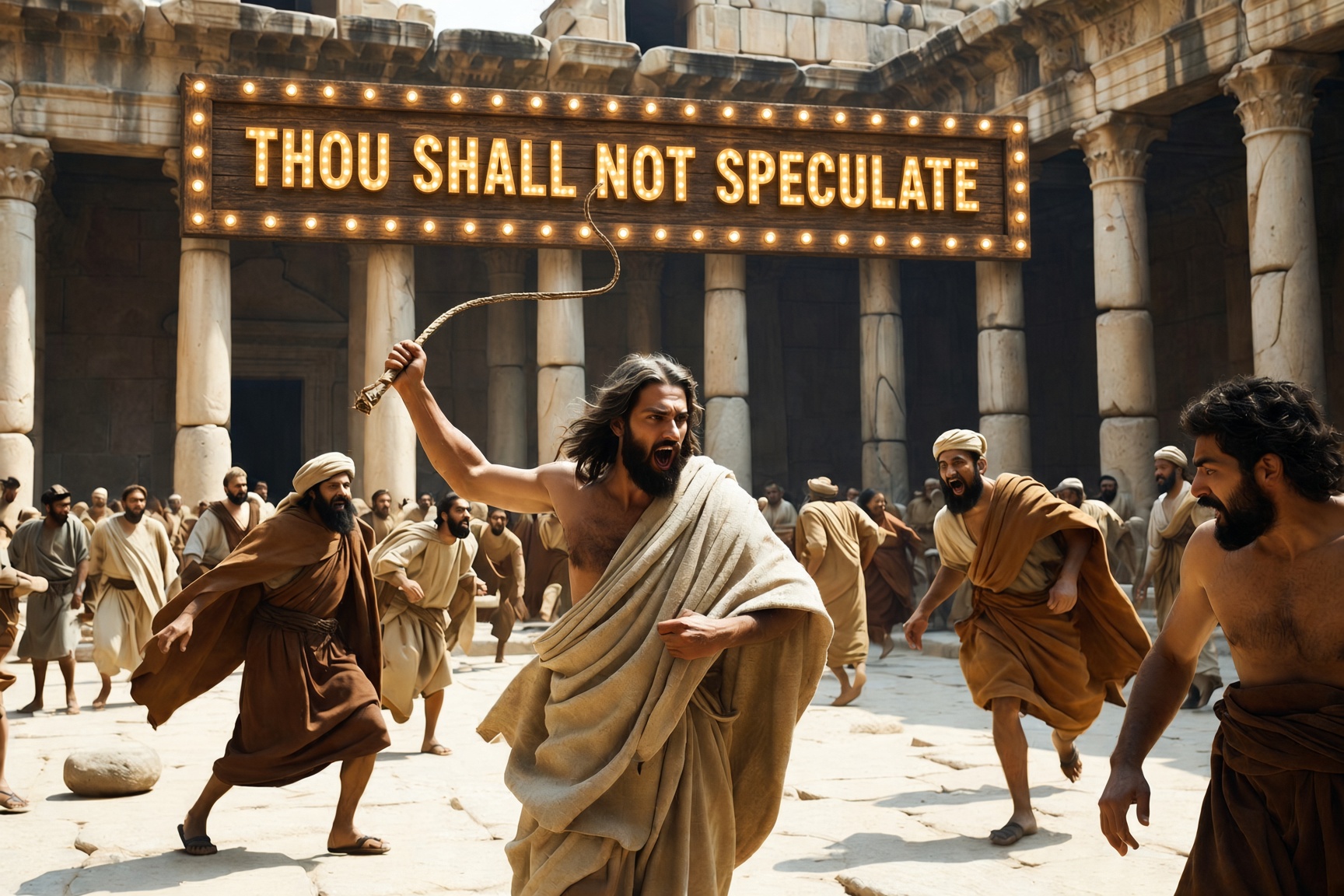
Crude oil is a global commodity. It trades toward a single price under what economists call the law of one price. Physical barrels move by tanker and pipeline, but the price that appears on screens is overwhelmingly set in paper markets: futures, options, swaps, and other derivatives. Speculators, hedgers, and arbitrageurs trade the paper; the physical market clears around the resulting price. Volatility brings more trading, and price spikes follow.
Once crude reaches a refinery, however, the pricing regime changes. The value of the finished product is set by refining margins, available capacity, inventories, fuel specifications, taxes, and regulatory compliance costs. Crude speculators no longer determine the pump price. The refinery and the policy environment do.
Law of one price. Large positions taken without touching a barrel. Volatility brings trading; spikes follow.
Here the regime changes. Crude speculators no longer determine the pump price.
Set by the refinery and the policy environment. Red tags are policy levers.
The shock hit crude, the paper market, in March. Set it against the timeline in § V: California’s capacity losses and rule changes came before the war and were still in place in November.
THE KOSMOS OF THE NATION, AND THE ORDERING OF ITS PEOPLE, IN THE TWENTY-SIXTH YEAR AFTER THE TWO THOUSAND
EIA data for the period approaching the November 3, 2026 midterms show a tight distillate market sitting on top of constrained refining capacity. Refineries ran above 95 percent utilization from May through September, the highest for those months since 1998, on capacity roughly 4 percent below 2019. Distillate inventories sat about 13 percent below the five-year seasonal average. Diesel crack spreads were elevated.
The national diesel increase between the two elections was nearly twice the percentage increase in regular gasoline. Both 2022 and 2026 featured tight distillate inventories and high refining margins. The difference is the policy overlay.
The Gulf Coast, buying the same crude in the same war, rose 20 percent. California rose 30, and its premium over the Gulf grew by nearly three-quarters.
Highest for those months since 1998.
After successive closures.
September 2026, seasonal comparison.
Tight inventories and export demand.
National diesel, EIA election-week survey, nominal. The first Trump midterm had the lowest price of the four. The second had the highest.
Refiners paid less for crude and charged more for diesel. The gap opened after the refinery gate. In Q3 2026 diesel crack spreads were nearly three times their year-earlier level, and refiners shifted output from gasoline to distillates.
Diesel moves the trucks, tractors and loaders. Its increase was nearly double gasoline’s, and it reaches the price of everything they deliver.
THE RELIEF OF THE YEAR 2022 SET OVER AGAINST THE CONSTRAINTS OF THE YEAR 2026
In 2022, governments acted to lower prices before the midterms. The Treasury estimated that Strategic Petroleum Reserve releases, coordinated with international partners, reduced U.S. gasoline prices by 17–42 cents per gallon. Multiple states suspended gasoline taxes; Penn Wharton Budget Model analysis found roughly 58–87 percent pass-through to retail depending on the state.
By 2026 the opposite policy direction was in force — most visibly in California, which added compliance costs, lost refining capacity, and raised taxes while the national market was already tight.
THE KOSMOS OF CALIFORNIA, AND THE APPARATUS OF ITS BOARD NAMED CARB
The California Air Resources Board controls more of what Californians pay for gasoline and diesel than almost any other regulator. Its two primary tools are the fuel specification itself and the Low Carbon Fuel Standard.
California requires its own reformulated gasoline (CARBOB). Relatively few refineries outside the state produce it. No pipelines deliver finished gasoline into California, so the state depends on its remaining in-state refineries and on marine imports. This isolation amplifies any local capacity loss or specification cost.
Under the LCFS, suppliers of higher-carbon fuels must buy credits from producers of lower-carbon fuels. CARB’s own 2023 assessment estimated the 2024 amendments would raise gasoline by 47 cents per gallon in 2025. After public backlash, CARB withdrew the figure, stated its model does not predict prices, and asserted that pass-through is a business decision. Independent analyses using CARB’s own methodology produced higher estimates.
CARB’s structure makes insulation from politics difficult. Twelve of its fourteen voting members are appointed by the governor and confirmed by the State Senate.
FIG. 1 — The Nov. 8, 2024 vote to tighten the Low Carbon Fuel Standard.
The twenty-two months before the emergency pause
From the November 8, 2024 LCFS vote to September 28, 2026, California tightened its fuel standard, lost two large refineries, and raised its excise tax automatically to 63.4 cents per gallon, the highest in the nation. The two closures together removed substantial California refining capacity in a market that can only burn its own specification and has limited import flexibility. Combined with the LCFS and cap-and-invest compliance costs (historically estimated in the range of the withdrawn 47-cent figure and related assessments), the state was adding more than $1.10 per gallon in identifiable policy costs and constraints by mid-2026.
On September 28, 2026—weeks before the midterms—Governor Newsom suspended the summer-blend (Reid vapor pressure) requirement until October 31, citing price spikes he attributed to the Iran conflict. CARB issued a regulatory advisory the same day allowing gasoline above normal vapor-pressure limits. The letter explicitly blamed “President Trump’s war in Iran.” The pause was real; the preceding twenty-two months of capacity reduction, tighter standards, and tax increases were also real.
FIG. 2 — Wilmington/Carson site after closure. 138,700 bbl/day offline.
FIG. 3 — Benicia, idled early 2026. Up to 170,000 bbl/day.
THE SPAN OF TWENTY-TWO MONTHS BEFORE THE PAUSE OF EMERGENCY WAS CALLED
Higher net margins in a constrained market attract supply. When California’s regulations and capacity losses raise the cost of serving the state, distributors respond to the realized return after transportation and compliance.
Neighboring markets that rely on West Coast supply must bid more to retain fuel. The premium does not stay inside California’s borders. Diesel, which moves freight, construction, and agriculture, transmits the cost into the price of nearly everything delivered by truck.
FIG. 4 — Diesel carries the premium into everything delivered by truck.
Carbon-intensity reduction targets raised.
Tighter credit requirements now binding on suppliers.
Roughly 5 percent of West Coast capacity removed.
In a market that can only burn its own specification and has limited import flexibility.
Gasoline 61.2¢ → 63.4¢, highest in the nation. Diesel excise to 48.2¢.
RVP limits waived until Oct. 31. CARB’s advisory letter explicitly blamed “President Trump’s war in Iran.”
THE EXIT POLLS OF THE VOTERS, AND THE NARRATIVE THAT IS WOVEN FROM THEM
Voters in both 2022 and 2026 treated fuel and inflation as important. In 2026, polling showed large shares of voters concerned about the cost of living and high prices; substantial numbers assigned responsibility to the president. Media coverage and official statements from California emphasized the Iran conflict.
The price mechanism is the political button. Once crude is refined, the finished gallon is priced by capacity, inventories, specifications, compliance costs, and taxes. Those are set by statute, regulation, and administrative action. In California the agency that writes and enforces the binding rules on fuel composition and carbon intensity is CARB. Its voting members are gubernatorial appointees. Its major 2024 LCFS amendments were adopted on a recorded vote after staff had calculated a 47-cent effect and then withdrawn the number. The same agency’s rules define the CARBOB specification that isolates the state. When two large California refineries closed under that regulatory regime, the market that could absorb the loss was already constrained by the rules the agency enforces. The automatic July 2026 excise-tax increase was written into law. The September 28, 2026 suspension of the summer-blend requirement was issued by the governor and implemented by CARB the same day, with the governor’s letter explicitly blaming the president for the prices the preceding twenty-two months of policy had helped produce.
That sequence is the operation of the mechanism. It is not an external force acting on prices; it is the set of decisions that determine the costs and constraints the market then prices. Voters experience the result at the pump and in freight rates. Exit polls and media narratives assign the political blame. The button that raised the cost between the two midterms was the state’s own regulatory and tax apparatus. Calling the resulting price “the market” or “Iran” simply names a different actor after the fact.
The common assertion confuses a global crude-paper market with the local refining, specification, inventory, and regulatory system that actually sets the price of the finished gallon. California’s apparatus, acting through CARB and related rules, raised that price over the interval between the two elections. The September 28 suspension arrived after the costs had already been imposed.
FIG. 5 — Election week, 2026.
The price mechanism is the political button.
Cause of death: California
Its genesis is not confusion. It is social engineering by way of a few dashes of authority and a dollop of repetition. The price mechanism is the political button: capacity, inventories, fuel specifications, compliance costs, and taxes are set by statute and regulation. In California those rules are written and enforced by CARB, whose members are gubernatorial appointees. Between the two midterms the apparatus tightened the Low Carbon Fuel Standard, lost major refining capacity under the resulting constraints, and raised the excise tax. Voters paid the difference at the pump. Exit polls and media assigned the blame elsewhere. The September 28 suspension arrived after the costs had already been imposed.